
The Snow Thrower Ratings
We analyzed snow thrower ratings across key factors including power source, clearing width, and ease of use. Our top picks offer reliable performance for every winter driveway.
 By Harry
Updated October 3, 2026
When winter brings heavy snowfall, a reliable snow thrower becomes essential for clearing driveways and walkways. But with so many models on the market, sorting through snow thrower ratings can feel overwhelming.
Our team at Snow Removal Wiki has researched specifications, expert reviews, and verified buyer feedback to identify the most impressive performers this season.
In this guide, we highlight three standout snow throwers that earned strong scores across our evaluation criteria.
Whether you need a corded electric model for consistent power, a cordless option for mobility, or an innovative automated machine, our research helps you make an informed choice.
For a complete overview of top-performing models, check out our snow blower roundup. Scroll down for our top picks and detailed buying advice.
| Award | Product | SRW Score About SRW ScoreThe SRW Score is our own rating from 0 to 10, based on performance, design and build, ease of use, and value. It reflects independent research and is never influenced by manufacturers, retailers, or affiliate commissions. Learn more › | |
|---|---|---|---|
| Best Overall |
 Westinghouse WSnow22 22-Inch Corded Snow Blower |
8.0/10 | Buy |
 YARBO S1 24-Inch Robotic Snow Blower |
8.0/10 | Buy | |
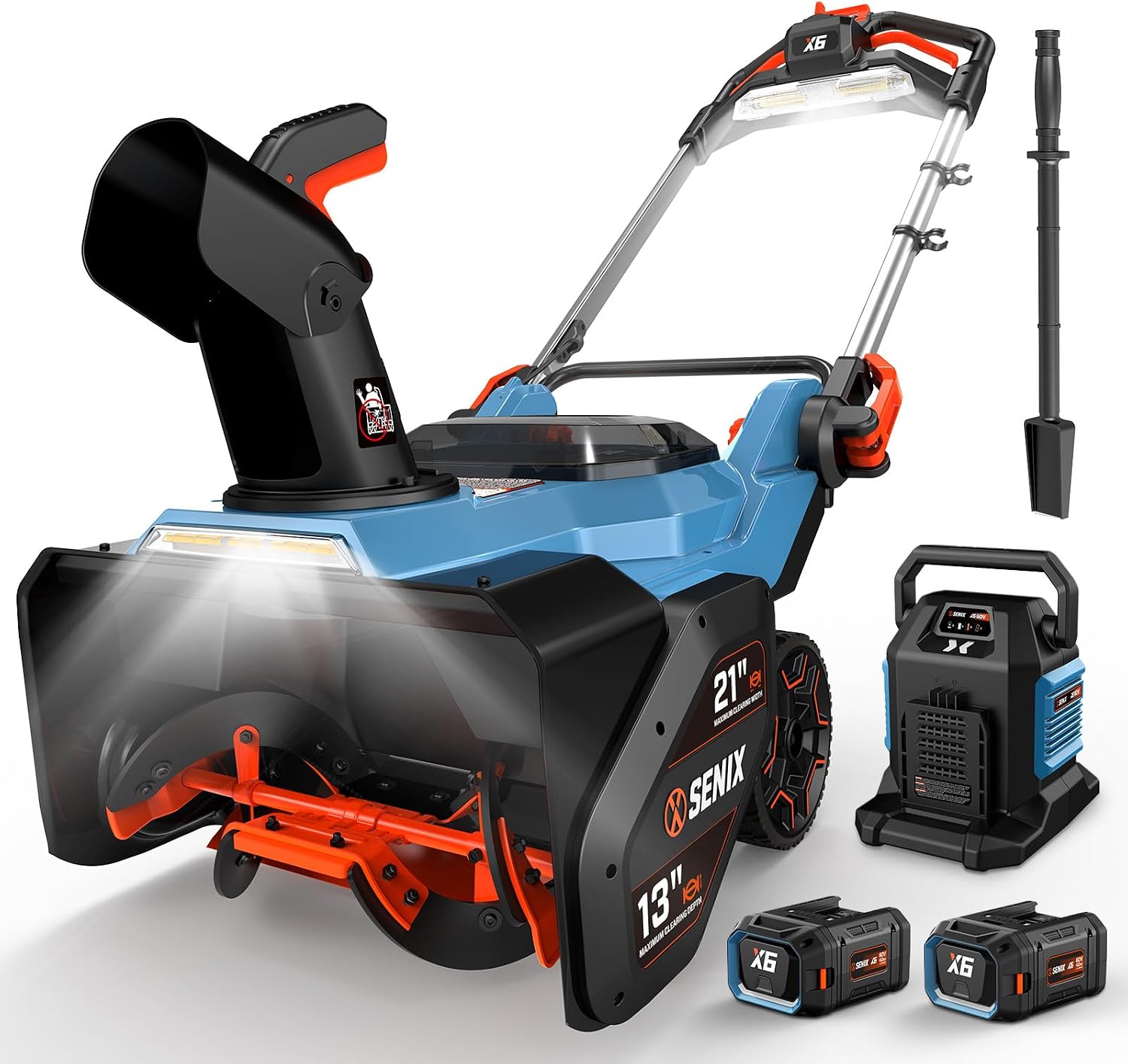 SENIX STX6-H 60V 21" Snow Blower |
7.2/10 | Buy |
Westinghouse WSnow22 22-Inch Corded Snow Blower
This corded electric snow blower delivers gas-like performance with push-button start, clearing a 22-inch path and throwing snow 25 feet. Its dual LED lights and adjustable chute make nighttime clearing easier, and the rubber-tipped steel auger protects surfaces. Ideal for homeowners who want reliable, low-maintenance snow removal on driveways and walkways without dealing with gas or batteries.
Pros
- Powerful 15-amp motor clears 840 lbs of snow per minute, comparable to gas models
- Push-button electric start eliminates gas, oil, and battery charging hassles
- Dual LED headlights improve visibility during early morning or evening use
- 180-degree adjustable chute directs snow precisely where needed
- Backed by a 2-year limited warranty and lifetime technical support
Cons
- Corded design limits range to extension cord length and proximity to outlets
- Not self-propelled; requires pushing manually (34.6 lbs weight)
- Maximum throwing distance of 25 feet may be insufficient for very large driveways
YARBO S1 24-Inch Robotic Snow Blower
The YARBO S1 is a fully autonomous, battery-powered snow blower designed for large properties over an acre. Its standout feature is a modular platform that swaps between snow clearing, mowing, and leaf blowing using the same core. Based on buyer feedback, setup can be time-intensive and the documentation is rough, but once operational it offers hands-off snow removal for driveways up to 6,000 square feet.
Pros
- 24/7 autonomous operation with weather-triggered scheduling and app control
- Modular design allows year-round use with interchangeable attachments
- Handles snow up to 12 inches deep per pass with a 24-inch clearing width
- RTK-GPS and vision sensors provide boundary-free navigation with good coverage
- Designed for large areas, clearing up to 6,000 sq ft on a full charge at 1-inch depth
Cons
- Setup is lengthy and complex, estimated around 12 hours by several owners
- Documentation is poorly translated, outdated, and occasionally inaccurate
- Some users report technical hiccups and delayed customer support responses
SENIX STX6-H 60V 21" Snow Blower
For homeowners with medium driveways and sidewalks, this cordless single-stage blower combines a powerful brushless motor with dual-blade auger to move up to 1,200 pounds of snow per minute. Electronic chute control and heated grips add convenience, while the 60V battery system provides cord-free freedom without the hassle of gas.
Pros
- Brushless motor clears up to 1,200 lbs of snow per minute with two selectable speeds
- Electronic chute rotates 200 degrees for precise placement at the push of a button
- Heated grips and LED headlights improve comfort and visibility in low-light conditions
Snow Thrower Ratings Buying Guide
Power Source: Corded, Cordless, and Beyond
The power source of a snow thrower directly affects its mobility, runtime, and maintenance requirements. Corded electric models, like the Westinghouse WSnow22, offer consistent power without battery anxiety, making them ideal for driveways with easy access to an outlet.
If you need freedom from cords, cordless options such as the SENIX 60V provide convenience but require battery management and have limited runtime. For those interested in battery technology, our article on battery powered snow blower worth covers the trade-offs.
For heavy-duty tasks, gas-powered machines remain an option, though we focus on electric models in this roundup. If you prefer the simplicity of a cord, corded electric snow blowers are a reliable choice for many homeowners.
Clearing Width and Throwing Distance
A snow thrower’s clearing width determines how many passes you need to clear a path. Wider widths, such as 22 inches on the Westinghouse, cover more ground per pass, while narrower ones are easier to maneuver in tight spaces.
Throwing distance is equally important; models that can project snow 25 feet or more help keep cleared areas free from buildup. For a deeper look at what affects throw distance, our guide on snow blower throw distance explains the factors involved.
Consider the typical snow depth and driveway layout when choosing between a compact or full-size machine.
Auger Design and Stage Type
Augers are the heart of any snow thrower, and their design influences how snow is collected and discharged. Single-stage models rely on the auger to both scoop and expel snow, working best on paved surfaces with moderate snowfall.
Two-stage models add an impeller to throw snow farther, handling deeper drifts and gravel driveways more effectively. The YARBO robot snow blower uses a two-stage system for automated clearing.
Understanding the differences between single-stage, two-stage, and three-stage snow blowers can help you match the machine to your typical weather conditions.
Ease of Use and Additional Features
Modern snow throwers come with features that simplify operation and maintenance. Electric start, adjustable chute controls, and LED lights improve usability during early morning or evening storms.
The Westinghouse WSnow22 includes dual LED lights and a steel auger, while the YARBO offers a fully automated design with modular components. For tips on accessories that can enhance your experience, see our snow blower accessories guide.
Weight and wheel size also affect maneuverability; consider whether your driveway is flat or sloped when selecting a model.
Why You Should Trust Us
Snow Removal Wiki is an independent review site that evaluates snow throwers and other winter gear through comprehensive research.
We score each product on a 0 to 10 SRW Score based on consistent criteria, including manufacturer specifications, consensus from expert reviews, verified buyer feedback, and published data from reputable sources.
We do not conduct our own product trials; our evaluations are grounded in research, published data, expert review consensus, and verified buyer feedback. This method ensures our recommendations reflect real-world performance and reliability.
For more on our approach, see our how to choose a snow blower guide. We may earn a small commission if you purchase through our links, but this does not influence our ratings.
Final Thoughts
After evaluating the top snow thrower ratings, we recommend these models for different needs:
- Best Overall: Westinghouse WSnow22 Corded Snow Blower, With a 22-inch clearing width, steel auger, and dual LED lights, this corded electric model delivers consistent performance and earned a strong SRW Score, making it the top pick for most driveways.
- Best Automated Snow Thrower: YARBO 2-Stage 24/7 Robot Snow Blower, This innovative machine offers two-stage performance with a modular design and full automation, also receiving high marks, ideal for those who want hands-off snow removal.
- Best Cordless Snow Thrower: SENIX 60V 21″ Cordless Snow Blower, With 16000mAh batteries and a dual port charger, this cordless model scored well and is perfect for medium-sized driveways where mobility matters.
Frequently Asked Questions
How much snow can a snow thrower handle?
The snow handling capacity depends on the model’s power and design. Single-stage electric models are best for light to moderate snowfall up to 8 inches, while two-stage gas or electric models can handle 12 to 18 inches.
The Westinghouse and YARBO in our roundup are capable of clearing heavy accumulations. For more details, see our guide on how much snow a snow blower can handle.
How long do snow blowers last?
With proper maintenance, a quality snow blower can last 10 to 15 years or more. Electric models typically have fewer mechanical issues than gas ones, but all benefit from regular care such as cleaning and storage.
Learn more about maximizing lifespan in our article on how long snow blowers last.
Are battery powered snow throwers worth it?
Battery-powered snow throwers offer convenience and quiet operation, but their runtime is limited by battery capacity. They are ideal for small to medium driveways if you have spare batteries.
The SENIX 60V in our list provides good performance for most residential use. For a detailed analysis, check out our review of the best cordless snow blower.
What is the difference between single-stage and two-stage snow throwers?
Single-stage snow throwers use a spinning auger to both scoop and discharge snow, making them lighter and better for paved surfaces. Two-stage models add an impeller that throws snow farther and can handle deeper drifts and gravel.
The YARBO robot snow blower is a two-stage design. For a thorough comparison, see our best two stage snow blower guide.
Is it worth buying a used snow thrower?
Buying a used snow thrower can save money, but it carries risks such as hidden wear or lack of warranty. Carefully inspect for rust, engine condition, and auger damage. For more advice, read our article on is a used snow blower a smart buy.
About the author

Harry writes reviews and buying guides for Snow Removal Wiki.