
The Best Time to Buy a Snow Blower
Seasonal pricing swings and stock shortages make snow blower timing tricky. We break down the best time to buy a snow blower and how to choose the right machine for your property.
 By Harry
Updated October 7, 2026
Timing a snow blower purchase well can save you a meaningful amount of money and ensure you are not stuck waiting for a restock when the first major storm hits.
Snow blowers are highly seasonal, which means prices, availability, and selection shift dramatically throughout the year.
Whether you need a compact electric model for a small walkway or a two-stage gas machine for a long gravel driveway, understanding the buying cycle helps you get the right machine at the right moment.
This guide uses Snow Removal Wiki’s research-based approach to break down the best time to buy a snow blower, explain how we assess machines, and walk through the key factors that matter in a snow blower.
We review products through careful research, published specifications, expert review consensus, and verified buyer feedback, so you get a trustworthy picture of what is worth buying. Below, you will find our top picks ranked by SRW Score.
| Award | Product | SRW Score About SRW ScoreThe SRW Score is our own rating from 0 to 10, based on performance, design and build, ease of use, and value. It reflects independent research and is never influenced by manufacturers, retailers, or affiliate commissions. Learn more › | |
|---|---|---|---|
| Best Overall |
 ALSO GO HG0544-2B 11-Inch Cordless Snow Shovel |
9.4/10 | Buy |
| Best Budget |
 Quazara Q-008-001 14-Inch Cordless Snow Shovel |
9.4/10 | Buy |
 STEELITE 20 Inch Corded Electric Snow Blower |
9.1/10 | Buy | |
| Best Premium |
 PowerSmart DB7108B 24-Inch Two-Stage Gas Snow |
8.8/10 | Buy |
| Best Value |
 SENIX STX2-M1 40V 21-Inch Snow Blower |
8.4/10 | Buy |
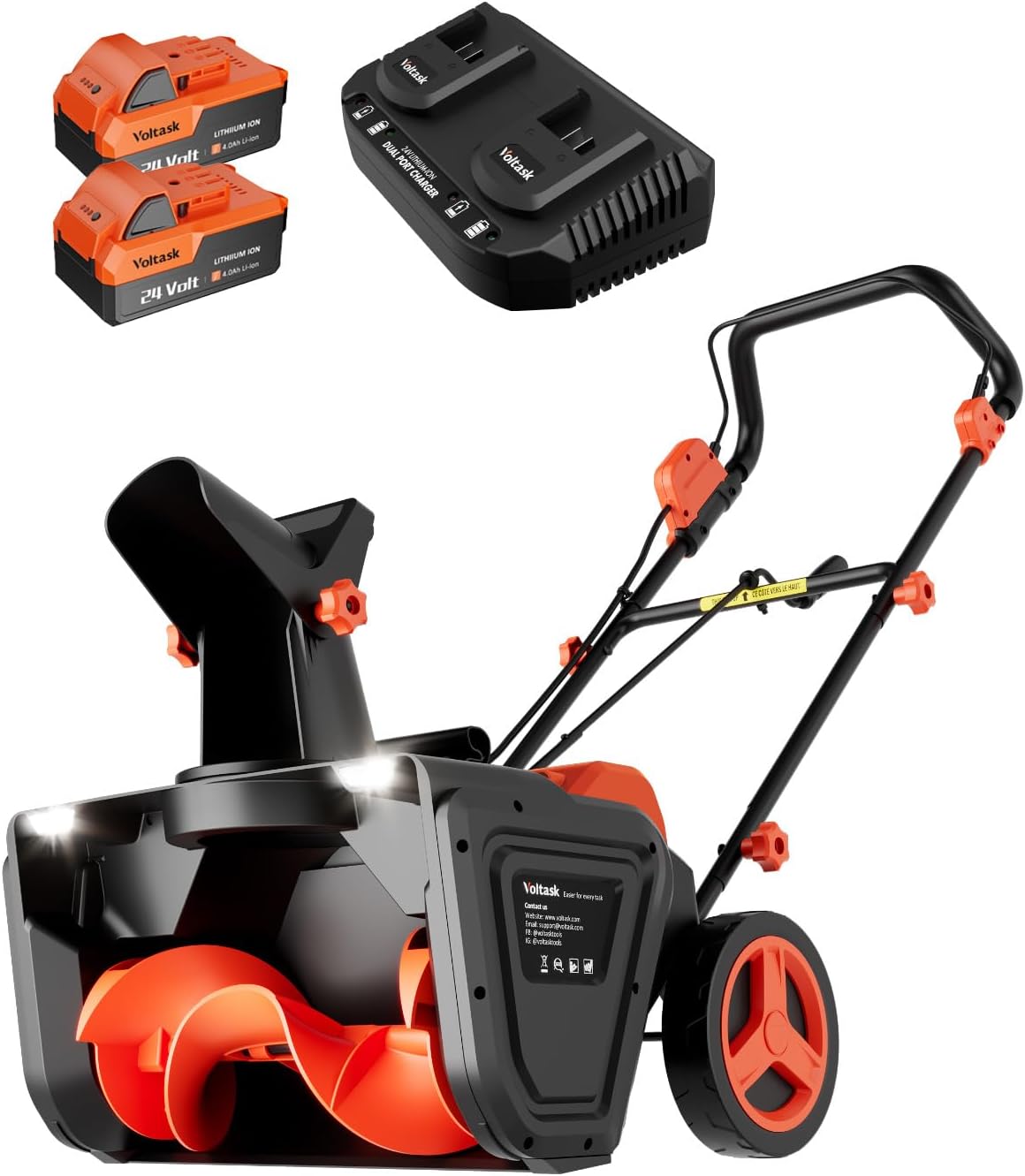 VOLTASK SB-40A-AZ 48V 20-Inch Snow Blower |
8.3/10 | Buy | |
 EGO Power+ SNT2122 21-Inch Snow Blower |
8.3/10 | Buy | |
 Westinghouse WSnow22 22-Inch Corded Snow Blower |
8.0/10 | Buy | |
 NOVUS NV18SSG 18-Inch Single Stage Snow Blower |
8.0/10 | Buy |
ALSO GO HG0544-2B 11-Inch Cordless Snow Shovel
Weighing just 6.6 pounds, this cordless snow shovel from ALSO GO makes winter cleanup less strenuous. The 21V motor drives an 11-inch roller that cuts through 6-inch deep snow, while the spiral auger resists clogging on concrete, asphalt, and gravel. The package includes two batteries and a fast charger, giving you extended runtime for small to medium areas.
Pros
- Lightweight design (6.6 lbs) with aluminum shaft for easy handling
- Dual 4.0Ah batteries provide up to 25 minutes runtime each, with fast 90-minute charging
- Anti-clogging spiral auger performs well on concrete, asphalt, and gravel
Cons
- Clearing width of 11 inches may require multiple passes on larger driveways
- Runtime of 25 minutes per battery could be limiting for heavy or deep snow
- No variable speed control or LED headlight included
Quazara Q-008-001 14-Inch Cordless Snow Shovel
This 14-inch cordless shovel features an 830W copper motor and includes two batteries for over 50 minutes of runtime, plus a three-way discharge that throws snow up to 33 feet. Its compact double-fold design makes storage easy, and the cold-resistant auger is gentle on surfaces. It is a practical pick for small to medium clearing jobs without back strain.
Pros
- Comes with two batteries for extended uninterrupted runtime over 50 minutes.
- Opt for surface-safe auger that clears up to 8 inches without damaging decks or pavement.
- Lightweight and foldable design for compact off-season storage.
Cons
- Limited 14-inch clearing width may require more passes on wider driveways.
- Ideal snow depth rated at 20 centimeters (about 8 inches) may limit performance in deeper snowfall.
- Generic brand may have less robust customer support compared to established names.
STEELITE 20 Inch Corded Electric Snow Blower
Powerful Brushless Motor: Featuring an upgraded 15‑amp brushless motor, this corded snow blower clears up to 860 lb/min and throws snow as far as 30 ft to speed up snow removal. Wide Clearing Path: Equipped with a 20‑inch clearing width and 10‑inch snow intake depth, the electric snow blower is ideal for light‑to‑moderate snow on flat paved ground. LED Light for Safe Night Operation: The integrated headlight improves visibility in dim winter conditions, enabling safer and simpler operation of the snow blower outdoors after dark.
PowerSmart DB7108B 24-Inch Two-Stage Gas Snow
The PowerSmart DB7108B is a heavy-duty two-stage gas snow blower designed for large driveways and frequent heavy snowfall. With a 212cc engine, it clears a 24-inch path through deep or wet snow and throws it up to 50 feet. Electric start and hand warmers add convenience in freezing conditions, while the 6 forward and 2 reverse speeds give you control on varied terrain.
Pros
- Powerful 212cc engine clears up to 2400 lbs of snow per minute and throws snow 50 feet
- Electric start with recoil backup ensures reliable startup even in very cold temperatures
- 6 forward and 2 reverse speeds provide versatility for different snow conditions and maneuvering
- 13-inch tires and adjustable skid shoes offer good traction and adaptability on paved or gravel surfaces
- LED headlight improves visibility during nighttime operation
Cons
- Heavy at 187 pounds, which may be difficult to maneuver for some users
- Some users report needing to adjust cable tension to engage drive wheels properly
SENIX STX2-M1 40V 21-Inch Snow Blower
The SENIX STX2-M1 is a lightweight cordless snow blower ideal for clearing driveways and walkways. Its 21-inch steel auger throws snow up to 33 feet, and the 40V brushless motor handles up to 12 inches of fresh powder. Weighing only 30 pounds with a foldable handle, it stores compactly and maneuvers easily.
Pros
- Lightweight at 30 pounds for easy handling
- Foldable and adjustable handle for compact storage
- Built-in LED light bar for low-light visibility
- Throws snow up to 33 feet for efficient clearing
- 5-year tool and 3-year battery warranty
Cons
- Performance may decline in heavy or wet snow conditions
VOLTASK SB-40A-AZ 48V 20-Inch Snow Blower
The VOLTASK SB-40A-AZ is a battery-powered snow blower with a 20-inch clearing width and 10-inch depth, designed for home and light commercial use. It features dual 24V batteries, a 180-degree directional chute, and LED lights for nighttime operation. Based on user feedback, it performs well on typical snow and is easy to maneuver, though heavier or slushy snow may be challenging.
Pros
- Dual battery system provides up to 30 minutes runtime
- 20-inch clearing width and 10-inch depth for efficient snow removal
- 180-degree directional chute with 25-foot throwing distance
- LED lights for visibility in low-light conditions
- Lightweight (22.9 lbs) and easy to assemble
Cons
- May struggle with heavy or slushy snow
- Runtime may be limited for larger driveways
EGO Power+ SNT2122 21-Inch Snow Blower
The EGO Power+ SNT2122 is a cordless single-stage snow blower that uses Peak Power technology to combine two 56V batteries for gas-like performance. It clears up to a 10-car driveway on a single charge, throws snow up to 42 feet, and features a durable steel auger for handling packed snow and ice. Ideal for homeowners seeking powerful, quiet, and maintenance-free snow removal.
Pros
- Gas-like power without fumes or noise
- Long runtime clears large driveways on one charge
- Durable 6-inch steel auger cuts through packed snow
- Adjustable skid shoes for uneven surfaces
- Weather-resistant with LED headlights for low-light use
Cons
- Single-stage design limited to snow depths up to 8 inches
- Requires two batteries (included) but additional batteries may be needed for very large areas
- Manual push operation may be less convenient than self-propelled models
Westinghouse WSnow22 22-Inch Corded Snow Blower
This corded electric snow blower delivers gas-like performance with push-button start, clearing a 22-inch path and throwing snow 25 feet. Its dual LED lights and adjustable chute make nighttime clearing easier, and the rubber-tipped steel auger protects surfaces. Ideal for homeowners who want reliable, low-maintenance snow removal on driveways and walkways without dealing with gas or batteries.
Pros
- Powerful 15-amp motor clears 840 lbs of snow per minute, comparable to gas models
- Push-button electric start eliminates gas, oil, and battery charging hassles
- Dual LED headlights improve visibility during early morning or evening use
- 180-degree adjustable chute directs snow precisely where needed
- Backed by a 2-year limited warranty and lifetime technical support
Cons
- Corded design limits range to extension cord length and proximity to outlets
- Not self-propelled; requires pushing manually (34.6 lbs weight)
- Maximum throwing distance of 25 feet may be insufficient for very large driveways
NOVUS NV18SSG 18-Inch Single Stage Snow Blower
A compact 18-inch gas snow blower that balances lightweight maneuverability with enough power for medium snowfall. Its 99cc engine, steel-reinforced rubber auger, and remote chute control make it a practical pick for small driveways and sidewalks.
Pros
- Compact and lightweight design (58 pounds) with 7-inch never-flat wheels for easy handling
- Steel-reinforced rubber auger improves durability and traction through compacted snow
- One-hand 190-degree remote chute control simplifies snow direction adjustments
- Cold start engine technology and included 5W-30 oil for reliable winter starting
Cons
- Plastic chute adjustment mechanism prone to breakage according to some buyer reports
- Unit may stall when encountering deep, heavily packed snow at driveway entrances
- Modest throw distance and may leave a trail of snow in the center path
Best Time To Buy A Snow Blower Buying Guide
Shopping for a snow blower at the right time is only half the battle. The other half is knowing which type of machine fits your property, how much power you really need, and which features are worth paying for.
This buying guide breaks down the most important criteria to consider when you are ready to make a purchase.
Clearing Width and Snow Depth
The clearing width determines how much snow you move with each pass. A narrower machine, typically around 18 to 21 inches, suits walkways, small porches, and compact driveways.
Wider machines, usually 24 inches or more, cut down the number of passes needed on a standard two-car driveway and are a better fit for larger properties. Snow depth matters just as much.
Single-stage machines handle up to about 8 to 10 inches of snow comfortably, while two-stage models power through deeper drifts and heavier, wetter snow.
If you live in an area that frequently gets lake-effect snow or blizzard conditions, prioritize a two-stage unit with a wider intake.
For light, powdery snow and shorter paths, a compact electric model or a single-stage gas unit keeps the job quick without the extra weight. Matching the machine to your typical snowfall prevents frustration and unnecessary strain on the equipment.
Our [best snow thrower for your driveway](https://snowremovalwiki.com/best-snow-thrower/) guide covers popular widths and use cases in more detail.
Power Source and Runtime
Snow blowers generally fall into three categories: corded electric, battery-powered, and gas. Corded electric models offer unlimited runtime and require no fuel, but they tie you to an outlet and an extension cord, which can be annoying on larger lots.
Battery-powered machines provide freedom of movement and quiet operation, but runtime depends on battery capacity and snow conditions. Gas models deliver the most raw power and are the standard choice for heavy-duty use, though they need more maintenance.
When evaluating battery-powered options, look at the voltage and amp-hour rating of the included batteries. Higher voltage systems like 40V and 60V generally push more snow and sustain longer runtimes than lower-voltage designs.
A machine with two batteries included, like the EGO Power+ SNT2122, gives you backup power for longer driveways. If you already own a battery platform from brands like EGO, buying a bare tool snow blower can be a cost-effective route.
Some models pair well with existing [battery powered snow thrower](https://snowremovalwiki.com/best-battery-powered-snow-thrower/) setups, letting you share batteries across your outdoor power equipment.
Single-Stage vs. Two-Stage Design
Single-stage snow blowers use a rubber or steel auger to scoop and throw snow in one motion. They are lighter, easier to maneuver, and typically cost less, making them a strong fit for paved surfaces and moderate snowfall.
Two-stage machines add an impeller that breaks up the snow and propels it through the chute with greater force. That extra power allows them to handle icy chunks, deep drifts, and gravel driveways without picking up and throwing stones.
For paved driveways and light snow, a single-stage unit is often all you need. For uneven terrain or heavy, wet snow, a two-stage self-propelled machine reduces physical effort and clears faster.
The PowerSmart 24-Inch Gas Snow Blower is a good example of a two-stage design that offers multiple forward speeds and reliable throwing distance.
If you are unsure which layout suits you, our guide to [non self propelled snow blowers](https://snowremovalwiki.com/best-non-self-propelled-snow-blower/) explains how simpler single-stage machines handle everyday clearing.
Maneuverability and Ergonomics
Pushing a snow blower through heavy, wet snow is physically demanding, so weight distribution, handle design, and self-propulsion matter a lot.
A self-propelled two-stage machine moves forward on its own, which is a major advantage for larger driveways and for users who do not want to wrestle with the machine.
Single-stage electric models are light enough to lift and steer easily, but they require you to do all the pushing.
Look for features that reduce strain, such as heated handles, adjustable chute rotation, and ergonomic grips. If you have back problems or limited mobility, a lighter electric shovel or a compact single-stage blower may be the safer choice.
We explore user-friendly options in our dedicated guide to the [best snow blower for elderly users](https://snowremovalwiki.com/best-snow-blower-for-elderly/), which focuses on ease of starting, manageable weight, and simple controls.
Reliability, Warranty, and Maintenance
A snow blower is an investment meant to last for years, so build quality and warranty coverage matter. Gas engines from reputable brands tend to be easier to service, with readily available replacement parts.
Electric motors require less maintenance but can be harder to repair if the motor fails. Check the warranty length and what it covers before you buy, as some brands only cover certain components.
Seasonal maintenance also affects reliability. Gas machines need fresh fuel, oil checks, and occasional spark plug replacement. Battery machines benefit from storing batteries indoors and keeping contacts clean. Corded models simply need a good extension cord rated for outdoor use.
If you want a dependable machine without the upkeep of an engine, a corded or battery model like the STEELITE 20 Inch Corded Electric Snow Blower offers a solid value proposition.
For a broader view of dependable machines, our [highest rated snow blower](https://snowremovalwiki.com/highest-rated-snow-blower/) roundup highlights models with strong owner satisfaction.
Why You Should Trust Us
Snow Removal Wiki is an independent review site focused on helping you make confident buying decisions. We do not sell snow blowers, and we are not affiliated with any manufacturer or retailer.
Our editors evaluate each machine against a consistent set of criteria and assign it a SRW Score on a 0 to 10 scale.
That score reflects how well a product performs relative to its category, its feature set, and the value it offers to typical homeowners.
Our evaluations are based on comprehensive research: we analyze manufacturer specifications, weigh expert review consensus, incorporate verified buyer feedback, and cross-check published data from reputable sources.
We do not conduct our own product trials; our evaluations are grounded in research, published data, expert review consensus, and verified buyer feedback.
This approach lets us identify consistent strengths and weaknesses across a wide range of real-world usage, from light dustings on a city sidewalk to heavy, wet snow on a rural driveway.
We also disclose that our site may earn affiliate commissions when you purchase through links on our pages. This does not influence our ratings or the order of products in our roundups.
Our goal is simple: provide transparent, well-researched recommendations that help you find the right snow blower for your property and your budget.
For additional guidance on buying within a specific price range, take a look at our [snow blower price guide](https://snowremovalwiki.com/snow-blower-prices/) or our [budget snow blower roundup](https://snowremovalwiki.com/best-budget-snow-blower/).
Final Thoughts
Choosing the right snow blower is about matching the machine to your climate, your property, and your physical needs.
The best time to buy a snow blower is typically during the off-season or early fall, when prices are lower and inventory is plentiful, but a well-researched pick can also be found during the winter if you act before the first big storm.
Every model in our roundup earned its place through a careful evaluation of specifications, expert consensus, and verified owner feedback.
Best Overall: PowerSmart 24-Inch Gas Snow Blower delivers the strongest combination of power, feature depth, and owner satisfaction in our lineup, making it our top choice for homeowners who want a serious two-stage machine.
Best Budget Pick: ALSO GO 21V Electric Cordless Snow Shovel is an affordable, lightweight entry point for small walkways and porches, with a high SRW Score driven by its convenience and low ownership costs.
Best for Light Duty: STEELITE 20 Inch Corded Electric Snow Blower pairs a compact footprint with consistent power and simple controls, making it a reliable companion for smaller paved areas.
Frequently Asked Questions
What is the best time to buy a snow blower?
The best time to buy a snow blower is during the late spring, summer, or early fall, when demand is low and retailers are clearing out previous-season inventory.
You will often find better prices and a wider selection before the first snowfall hits. If you wait until winter, you risk limited stock and full retail pricing, especially after a major storm.
That said, buying during the off-season means the machine will sit in storage for a few months. If you have space and are comfortable performing basic maintenance before first use, the savings can be substantial.
Our [snow blower ratings](https://snowremovalwiki.com/snow-blower-ratings/) guide can help you compare models even when you are not ready to buy immediately.
Should I buy a corded, battery, or gas snow blower?
It depends on the size of your driveway, your tolerance for maintenance, and how often you clear snow. Corded models are affordable and dependable but require an outlet and extension cord.
Battery models are quiet, clean, and easy to start, and they work well for small to medium driveways if you have enough battery capacity.
Gas models offer the most power and are best for large driveways, heavy snow, or gravel surfaces.
For a deeper comparison of battery-powered options, see our guide to the [most powerful cordless snow blowers](https://snowremovalwiki.com/most-powerful-cordless-snow-blower/).
If you prioritize ease of use and quiet operation, a [cordless snow thrower](https://snowremovalwiki.com/best-cordless-snow-thrower/) might be the right fit for your home.
How much snow can a single-stage snow blower handle?
A typical single-stage snow blower handles up to about 8 to 10 inches of powdery snow. Some powerful electric models and gas units can manage slightly deeper snow, but wet, heavy snow will reduce performance.
If your area regularly receives more than a foot of snow at a time, a two-stage machine is a safer choice because it can break up and throw heavy snow more effectively.
Two-stage models also handle uneven surfaces better because the auger does not sit directly on the ground. For more information on two-stage performance, check our [most powerful gas snow blower](https://snowremovalwiki.com/most-powerful-gas-snow-blower/) guide, which covers machines designed for demanding conditions.
Do battery snow blowers work in cold temperatures?
Yes, battery snow blowers work in cold temperatures, but cold weather does reduce battery efficiency and runtime.
Lithium-ion batteries perform best when they are kept warm before use, and many manufacturers recommend storing batteries indoors until you are ready to clear snow.
Some models also feature weather-resistant housings that protect the battery and electronics from snow and moisture.
Using a machine with two batteries, like the EGO Power+ SNT2122, can help extend runtime because you can swap in a fresh battery when the first one drains.
To learn more about high-voltage battery systems, our [most powerful 60v snow blower](https://snowremovalwiki.com/most-powerful-60v-snow-blower/) guide covers the latest generation of battery-powered machines.
Is it worth paying more for a two-stage snow blower?
If you have a long driveway, deal with heavy wet snow, or clear a gravel surface, a two-stage snow blower is worth the higher price. The self-propelled drive system and powerful impeller save time and physical effort.
For small paved driveways and light snowfall, a single-stage model is usually sufficient and saves you money.
Two-stage machines also tend to have wider clearing widths, which reduces the number of passes required.
If you are deciding between spending more for a two-stage unit or staying within a tighter budget, our [snow blower under 1000](https://snowremovalwiki.com/best-snow-blower-under-1000/) roundup includes several well-regarded options that balance cost and capability.
How do I maintain a snow blower during the offseason?
For gas snow blowers, drain the fuel or add a fuel stabilizer, change the oil, and remove any debris from the auger and chute.
Store the machine in a dry place and check the spark plug and belts before the next season. For electric and battery models, store batteries indoors at room temperature, keep contacts clean, and charge them periodically to maintain battery health.
A little offseason maintenance goes a long way toward reliable performance. If you are looking for a low-maintenance machine, our [easy to start snow blower](https://snowremovalwiki.com/best-easy-to-start-snow-blower/) guide highlights models that are simple to operate and keep running with minimal fuss.
About the author

Harry writes reviews and buying guides for Snow Removal Wiki.