
The Best Snow Rake
Roof snow can turn into ice dams and costly repairs. We compared roof rakes for reach, blade material, and shingle safety so you can clear snow from the ground.
 By Harry
Updated October 11, 2026
Roof snow does more than make a house look like a winter postcard. When heavy snow piles up, it adds weight to rafters, promotes ice dams along the eaves, and can turn a roof edge into a falling hazard.
A good snow rake lets you clear that snow while staying on the ground, which is safer than climbing a ladder in slick conditions.
The best snow rake in 2026 should feel light enough to lift repeatedly, long enough to reach the roofline, and gentle enough to protect your roofing material.
In this guide, Snow Removal Wiki compares roof rakes using a synthesis of published specifications, expert review consensus, and verified buyer feedback.
We evaluated each model against consistent criteria for reach, blade design, handle comfort, and compatibility with common roof surfaces. The picks below are the standouts from that research, with the most versatile option listed first.
| Award | Product | SRW Score About SRW ScoreThe SRW Score is our own rating from 0 to 10, based on performance, design and build, ease of use, and value. It reflects independent research and is never influenced by manufacturers, retailers, or affiliate commissions. Learn more › | |
|---|---|---|---|
| Best Overall |
 Avalanche! AVA500 15.5' Roof Snow Rake |
8.4/10 | Buy |
 SNOWPEELER 30 ft Telescopic Roof Rake |
8.3/10 | Buy | |
| Best Budget |
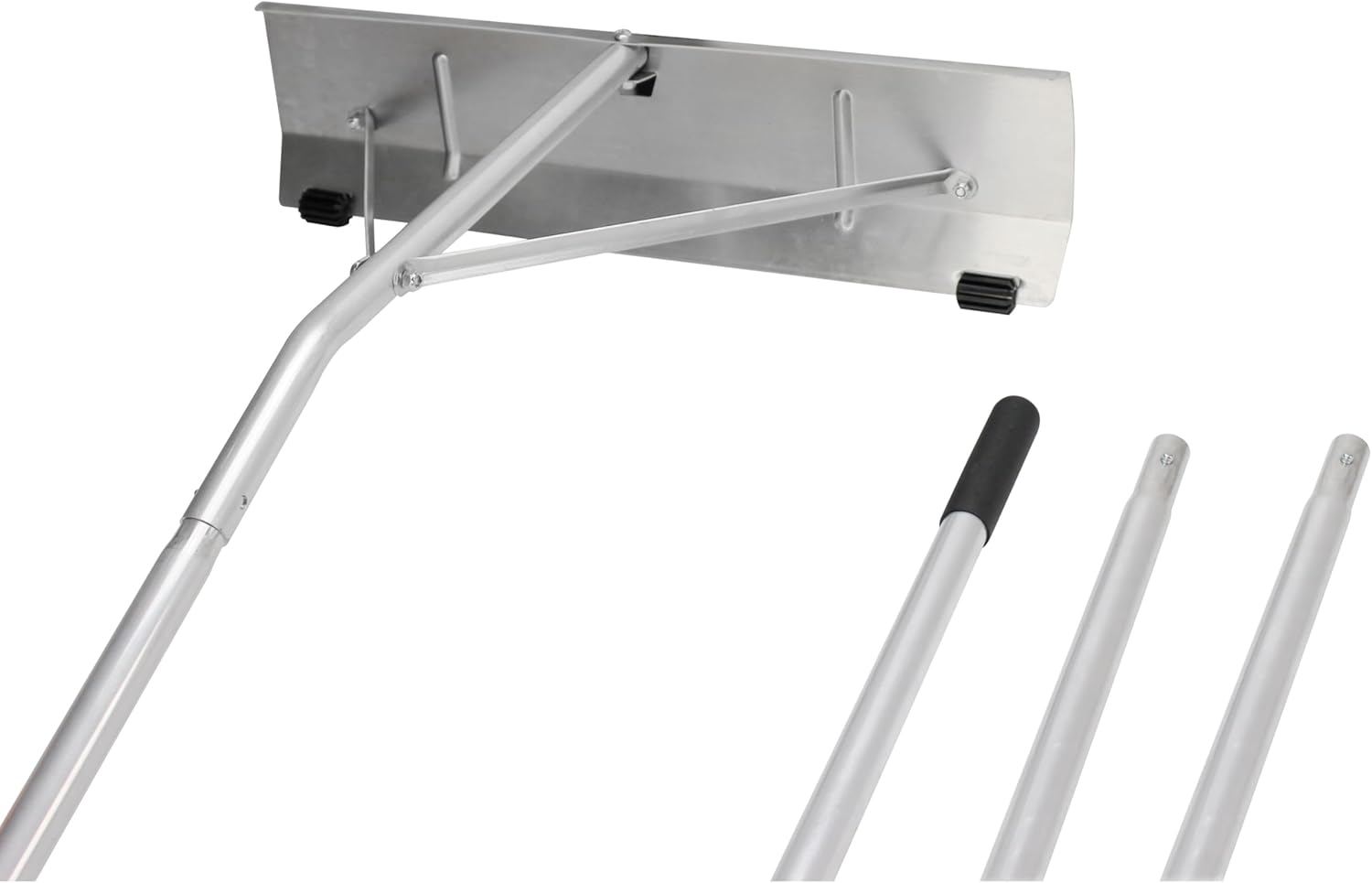 Extreme Max 5600.32 Roof Snow Rake |
8.1/10 | Buy |
Avalanche! AVA500 15.5' Roof Snow Rake
For homeowners needing to clear snow from asphalt shingle roofs without damage, the Avalanche! AVA500 uses a lightweight fiberglass pole and a plastic slide with wheels to glide over shingles. Its snap-together assembly makes setup quick, and the 15.5-foot reach lets you work from the ground.
Pros
- Lightweight fiberglass pole reduces fatigue
- Snap-together assembly for quick setup
- Wheels protect asphalt shingles from damage
Cons
- Plastic slide may be less durable than metal alternatives
- 15.5-foot pole may be insufficient for very high roofs
SNOWPEELER 30 ft Telescopic Roof Rake
Cào tuyết mái dài 30 ft với tay cầm kính thiên văn giúp dọn tuyết từ mặt đất, không cần leo thang. Lưỡi nhôm cấp thương mại cắt tốt cả tuyết mới lẫn tuyết nén, kèm tấm trượt chống rách và đệm bảo vệ mái. Phù hợp với người cần dọn tuyết mái thấp, nhiều tuyết và muốn hạn chế nguy hiểm khi leo trèo.
Pros
- Tầm với 30 ft từ mặt đất, hạn chế dùng thang
- Lưỡi nhôm bền cắt tốt tuyết tươi và tuyết nén
- Tấm trượt chống rách và đệm trượt bảo vệ mái
- Thiết kế dạng đoạn nối cho phép tùy chỉnh chiều dài
Cons
- Nặng khoảng 13 pounds nên khó điều khiển khi tuyết dày
- Nhiều người dùng phải cào 2 lượt mới sạch hẳn
- Vẫn cần cào thường để làm sạch hoàn toàn mái
Extreme Max 5600.32 Roof Snow Rake
For homeowners dealing with snow buildup on roofs, the Extreme Max 5600.32 offers a long 21-foot reach and a 24-inch blade with rollers that protect shingles. Its lightweight aluminum frame and snap-button assembly make it easy to handle and store, though it works best when pulled rather than pushed.
Pros
- Lightweight aluminum construction makes it easy to maneuver
- Blade rollers protect shingles while providing close snow removal
- Quick snap-button handle assembly and disassembly for storage
- Long 21' reach suitable for two-story houses
Cons
- Plastic blade rollers can break off easily, according to user reviews
- Support arms may bend if the rake is pushed instead of pulled
Best Snow Rake Buying Guide
Before you choose a roof rake, it helps to think about the size of your roof, the type of snow you get, and how much weight you want to lift. The right model will clear snow quickly without turning the job into a shoulder workout.
Blade Width and Roof-Friendly Materials
A wider blade clears more snow in each pass, but it also increases drag and makes the rake harder to pull. Most homeowners do well with a blade in the 24 to 30 inch range.
Wider blades suit big, simple roof planes, while narrower blades work better in tight valleys or around dormers.
Blade material matters at least as much as width. Aluminum heads are durable and bite into dense snow, while plastic or polymer edges slide across asphalt shingles without scraping away granules.
If you regularly deal with the dense, heavy wet snow that challenges a snow blower for heavy wet snow, a stiffer blade helps you break up the load before it turns into ice.
Reach and Telescoping Handles
Measure the distance from the ground to the eave, then add several feet to reach up the slope. A 21 foot rake covers many ranch and single story homes, while a 30 foot telescoping model suits taller walls and deeper roof planes.
Confirm that the locking mechanism feels secure before you lean into a pull.
Extension sections add versatility, but every extra foot also shifts the balance point. Think about the collapsed length if you need to store the rake in a garage or shed.
Homeowners who already plan around a snow blower for a 500 ft driveway will recognize the value of matching tool length to the actual space you need to cover.
Weight and Ergonomic Design
A roof rake is a lifting tool, not just a pushing tool. Repeatedly raising a long handle puts stress on your shoulders and lower back, especially after a wet storm.
Look for a frame made from aluminum or lightweight composite, and choose a model with a comfortable grip near the balance point.
Some handles include a D shaped grip or a padded section that makes the pulling motion feel more natural.
If your outdoor routine already relies on a compact electric snow thrower for walks and steps, you will appreciate the same attention to weight savings in a roof rake.
Rake Head Shape and Snow Flow
Curved and scooped heads do a better job of pulling snow away from the roof instead of scraping it along the surface.
A slight lip on the back edge encourages snow to roll forward and off the side, which reduces the force needed on each stroke.
Flat blades are simpler and often more affordable, but they can dig into shingle edges or pick up ice chunks. A smooth, continuous curve also makes it easier to clear gutters without catching the metal.
Pair your roof maintenance with a long lasting ice melt to keep leftover moisture from refreezing at the edge.
Matching the Rake to Your Roof Type
Asphalt shingle roofs are the most common, and they tolerate a wide plastic blade better than a sharp metal edge. Metal roofs, especially standing seam panels, need a softer blade and careful positioning so you do not dent the seams.
Slate and tile roofs require a very light touch and a head with no exposed hardware.
If ice has already formed at the eaves, address the surface first. A quick pass with a driveway de-icer can loosen the bond, and then the roof rake can do its job without scraping.
For the area below the roofline, keep your walking surfaces safe and plan the rest of your snow removal routine before the next storm arrives.
Why You Should Trust Us
Snow Removal Wiki does not accept payment from manufacturers to influence a ranking. We evaluate each product with the same rubric, then assign a score from 0 to 10 called the SRW Score.
That score reflects how well a model matches the needs of a typical homeowner, not how many marketing claims it makes.
Our research combines manufacturer specifications, expert review consensus, verified buyer feedback, and published data with clear sourcing. We do not conduct our own product trials; our evaluations are grounded in research, published data, expert review consensus, and verified buyer feedback.
That approach keeps recommendations consistent across every category, from roof rakes to snow blower ratings. When you buy through links on our site, we may earn a commission, but that never affects the ranking or the SRW Score.
Final Thoughts
Best Overall: Avalanche! Roof Snow Rake. This model earned the highest SRW Score of the group thanks to a stable design, smooth blade action, and durable all around construction.
Best Telescoping Reach: SNOWPEELER Premium Roof Rake. A 30 foot telescoping shaft gives it the most reach in this group, and the curved head keeps snow moving away from the roofline. It is the pick for tall two story walls and steep roof planes.
Best Budget Pick: Extreme Max Shingle-Saver Roof Rake. The 24 inch polymer head is friendly to asphalt shingles, and the 21 foot reach covers typical single story homes without a premium price. It is the strongest combination of price and performance in our research.
Whichever model you choose, a roof rake is only one part of a complete winter plan. Keep the roof clear before heavy snow accumulates, protect the eaves from ice, and choose ground level tools that match the size and shape of your property.
Frequently Asked Questions
How often should I clear snow from my roof?
Aim to clear after every few inches of accumulation, especially if the snow is dense or the forecast calls for freezing rain. Waiting until the end of a storm can turn a light rake into a heavy workout.
Homes that see blizzard conditions should check the roof more often because wind can drift snow into deeper pockets.
Can a snow rake damage shingles?
It can if you scrape aggressively or use a sharp metal blade. Pull the rake gently and let the blade glide over the surface.
Stop when you feel resistance from the shingle texture, and never try to chop at ice with the edge of the blade.
How long of a roof rake do I need?
Measure from ground to eave and add 3 to 4 feet for the roof slope. A 21 foot rake works for many single story homes, while homeowners with taller walls should consider a 30 foot telescoping model.
This is similar to matching equipment to the area you need to clear, such as choosing a snow blower for walkways.
Do I need a snow rake for a metal roof?
Metal roofs shed snow more easily than asphalt, but they still benefit from raking in heavy snow zones. Use a soft polymer blade and work parallel to the seams so you do not dent the panel.
Keep the pressure light and avoid stopping on top of a standing seam.
How can I prevent ice dams?
The best way to prevent ice dams is to clear snow before it melts and refreezes at the eaves. A roof rake removes the fuel for an ice dam, and ice melt pellets help manage the ice that has already formed on the ground.
Is roof raking safer than climbing onto the roof?
Yes. A roof rake keeps both feet on the ground and avoids the risk of falling from a ladder or roof edge. For complicated rooflines, start at the highest snow and work downward in small sections.
The same caution you would apply to a used snow blower applies to buying a secondhand roof rake with an uncertain handle condition.
About the author

Harry writes reviews and buying guides for Snow Removal Wiki.