
The Best Salt Spreader Under
Comparing salt spreaders under 2000? We researched capacity, spreading reach, and mounting for tailgate, tow-behind, and walk-behind models.
 By Harry
Updated October 10, 2026
Winter maintenance gets expensive quickly when ice and snow pile up on a long driveway, and hand broadcasting deicer across every foot of pavement is slow, uneven, and wasteful.
A dedicated spreader changes that by laying down a consistent ribbon of salt or ice melt, which means fewer passes, less material scattered onto lawns, and safer surfaces for vehicles and foot traffic.
This guide is built around the best salt spreader under 2000, covering models that balance capacity, spreading distance, and mounting style for residential and light commercial use.
Snow Removal Wiki selects products through synthesis research, comparing specifications, expert review consensus, and verified buyer feedback rather than relying on a single opinion.
We looked at hopper volume, auger or spinner design, controller quality, and how easily each unit mounts to a truck, UTV, or trailer.
The goal is to help you narrow the field before you buy, whether you maintain a suburban driveway or a small commercial parking lot.
Below you will find our ranked top picks, followed by a detailed buying guide and answers to common questions.

Buyers Products TGS02 SaltDogg Tailgate Salt
The SaltDogg TGS02 4.0 Cubic Foot Tailgate Spreader is ideal for residential and light commercial applications using ice melt and bagged salt, and works with 1/2 ton, 3/4 ton, and 1 ton trucks. It features a horizontal auger feed that keeps material moving. The spreader has a low-profile 4.0 cubic foot poly hopper, and mounts to a 2 in. Class 4 receiver. The spreader operates a 9 in. poly spinner and can cast material up to 30 ft. Its 1/3 HP, 12V dual shaft gear motor is controlled by an included variable speed in-cab controller. It comes prewired for an optional vibrator kit (sold separately).

Buyers Products TGSUVPROA SaltDogg Tailgate Salt
Product Description The SaltDogg TGSUVPROA 4.4 Cubic Foot Tailgate Spreader features vertical auger assist and an optional vibrator kit that make it a more robust version of the popular TGSUV1B. With a compact size and hitch-mount design, it's a great material spreader solution for an SUV or a 1/2 ton, 3/4 ton, or 1 ton truck. The spreader features a corrosion-resistant 4.4 cubic foot poly hopper. Its hitch mount can fold away for easy tailgate access and is compatible with 2 in. Class 4 receivers. Its 9 in. poly spinner can cast #1 free flowing rock salt up to 30 feet. A 1/2 HP, 12V motor is directly wired and is controlled by an included variable speed in-cab controller. From the Manufacturer Ideal for residential/light commercial applications. Features an attractive and rugged polymer black hopper and orange powder coated steel mounting frame. Fold-away feature�simply release hitch pin and spreader folds away for easy access to rear door or tailgate. Capacity: 4.4 cubic feet/331 pounds #1 rock salt or similar material. Heavy-duty sealed ball bearing 1/6 HP spreader motor with direct-to-battery wire harness. Material flow up to 30 feet controlled from an in-cab variable speed control. Comes complete with all mounting hardware for 2-inch receiver hitches.
Buyers Products TGS02 SaltDogg Tailgate Salt
The SaltDogg TGS02 4.0 Cubic Foot Tailgate Spreader is ideal for residential and light commercial applications using ice melt and bagged salt, and works with 1/2 ton, 3/4 ton, and 1 ton trucks. It features a horizontal auger feed that keeps material moving. The spreader has a low-profile 4.0 cubic foot poly hopper, and mounts to a 2 in. Class 4 receiver. The spreader operates a 9 in. poly spinner and can cast material up to 30 ft. Its 1/3 HP, 12V dual shaft gear motor is controlled by an included variable speed in-cab controller. It comes prewired for an optional vibrator kit (sold separately).

Ice Master IM5000 100-Lb Walk Behind Salt Spreader
For commercial properties needing reliable ice control, the Ice Master IM5000 pairs a reinforced gear system with a 100-pound capacity hopper. Its 4-flap deflector allows precise spreading near sidewalks and sensitive areas, while the welded steel frame stands up to heavy use.
Pros
- Upgraded reinforced gear system for enhanced durability
- Large 100-lb capacity hopper reduces refill frequency
- Adjustable 4-flap poly deflector for controlled spread patterns
- One-piece fully-welded steel frame for strength
Cons
- Large 40x25x31-inch dimensions may require considerable storage space
Meyer Products BL400 400-lb Salt Spreader
Built for commercial-grade ice control, this spreader pairs a 400-pound poly hopper with an electric drive system for consistent material flow in freezing conditions. Its corrosion-resistant construction and wide distribution pattern make it a reliable choice for treating driveways, parking lots, and roadways from trucks or UTVs.
Pros
- 400-pound hopper capacity reduces refill stops
- Electric drive delivers consistent performance in cold weather
- Corrosion-resistant poly hopper withstands salt and moisture
- Wide, even distribution pattern for effective coverage
- Compatible with pickup trucks, UTVs, and utility vehicles

Meltco ECL-TurfProtect50 Ice Melt Pallet
This professional-grade ice melt from Meltco combines magnesium and calcium chloride for effective melting down to -10°F. The biodegradable green indicator ensures even application, while the formula is designed to be gentler on concrete, pets, and plants when used as directed. Ideal for municipalities or homeowners with large properties needing bulk supply.
Pros
- Works effectively down to -10°F for reliable ice melting in cold climates
- Green color indicator helps visualize coverage for even application
- Formulated to be less harsh on concrete and vegetation when used as directed
- Anti-clog granules ensure consistent flow in spreaders
- Made in USA with commercial-grade quality
Cons
- Pallet of 49 bags (2500 lbs) requires significant storage space and heavy equipment to move
- Contains sodium chloride despite 'organic' marketing, which may be less gentle on vegetation than pure magnesium chloride
- No smaller packaging options available for residential users with limited needs

ACHMRJIJ 150 lb UTV Broadcast Spreader
This receiver-mount spreader turns a UTV into a versatile landscaping tool, handling up to 150 lbs of salt, fertilizer, or seed. Its sealed 12V motor and adjustable shut-off gate provide reliable, customizable spreading up to 30 feet, while the included lid protects materials from the elements. Ideal for property owners and landscapers seeking a durable, hitch-mounted solution.
Pros
- 150 lb capacity for large coverage
- Universal 2-inch receiver hitch fits most UTVs
- Protective lid keeps contents dry and clean
- Adjustable spread pattern for different materials
- Rust-resistant poly hopper and sealed motor

Buyers 3031475 Adjustable Chute Swing
This replacement chute swing from Buyers is designed for SaltDogg PRO series spreaders, specifically the PRO2000 and PRO2500 lines. It features an adjustable design to control material flow and weighs 56 pounds, indicating a sturdy build. Based on a single verified buyer review, it holds a perfect 5-star rating.
Pros
- Direct fit for SaltDogg PRO2000 and PRO2500 series spreaders (including CH models)
- Adjustable chute swing allows customized material flow
- Heavy-duty construction at 56 pounds
Cons
- Compatible only with SaltDogg PRO2000 and PRO2500 series spreaders
- Heavy weight (56 lbs) may require two-person installation
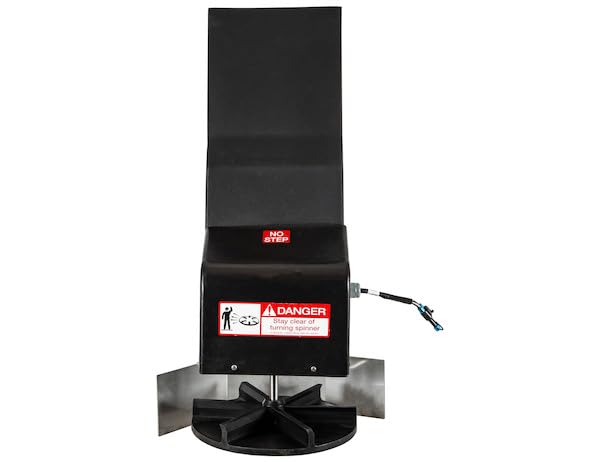
3019256 Replacement Chute Assembly for SaltDogg
Replacement Chute Assembly for SaltDogg SHPE4000 and SHPE6000 Spreaders

Buyers 3006620 SaltDogg Controller
This controller is a direct replacement and upgrade for older SaltDogg SHPE V-Box spreader models. Based on verified buyer feedback, it delivers a perfect fit and reliable performance, with one user calling it the best replacement. The unit comes new with its mounting bracket and all necessary connections, though the box may show minor handling marks.
Pros
- Replaces and upgrades older SaltDogg controllers (models 3014199 and previous 3006620)
- Includes mounting bracket and all required connections for installation
- High customer satisfaction based on available 5-star review
Cons
- Designed specifically for SaltDogg SHPE V-Box spreaders, not universal
- Box may have minor smudges from handling (product itself is new)

WorkHouseSigns 250-Pack Customizable Yard Sign
This customizable yard sign offers high visibility with double-sided printing and a large 18x24 inch format. Ideal for businesses or events needing bulk signage, each sign includes an H-stake for easy outdoor installation. The weather-resistant Coroplast material keeps your message clear in various conditions.
Pros
- Customizable text for business or personal message
- Double-sided printing for exposure from both directions
- Weather-resistant and durable for outdoor use
- Includes H-stake stand for quick setup
- Bulk pack of 250 signs for large-scale needs
Cons
- Bulk quantity may be excessive for individual or small-scale use
- No pre-designed templates or graphics options (only text input)

SnowEx 240 lb. Tailgate Spreader
Designed for pickup trucks, the SnowEx 240 lb. tailgate spreader offers a straightforward way to distribute salt or ice melt. Its 240-pound capacity allows for fewer refills during use, and the tailgate mount simplifies installation.
Pros
- 240-pound capacity for larger spreading jobs
- Tailgate mount for easy attachment to trucks

SNOWEX SD-95SS 160 lb Drop Spreader
The SNOWEX SD-95SS is a heavy-duty manual walk-behind drop spreader built for precise salt application on large surfaces. Its 160-pound capacity and stainless steel frame suit frequent use, while the regulated drop and precise flow control allow accurate spreading. The 13-inch pneumatic wheels and included top screen and cover add convenience for consistent winter maintenance.
Pros
- Large 160-pound hopper capacity reduces refill frequency
- Stainless steel frame and axle offer corrosion resistance and durability
- Regulated drop with precise flow control for accurate salt placement
- Pneumatic 13-inch wheels improve maneuverability on uneven ground
- Comes with top screen and cover for protection and debris filtering
Cons
- Heavy at 54 pounds, making it less portable
- Narrow 2.3-foot spread width requires more passes for wide areas
- Fixed T-handle limits ergonomic adjustment for different user heights

Trynex SnowEx SD-95 160-lb Drop Spreader
For clearing ice from sidewalks and tight paths, the Trynex SnowEx SD-95 delivers a straightforward solution. Its 160-pound capacity and 28-inch spread width make it practical for applying rock salt or pelletized material in confined areas without overcomplicating the job.
Pros
- Large 160-pound capacity reduces refill frequency
- 28-inch spread width matches standard sidewalks
- Simple drop spreader design for precise placement
Cons
- Drop spreading only, not ideal for open driveways
- Heavy when fully loaded may be difficult to push

Meyer Products 38180 Walk Behind Spreader
A basic walk-behind spreader from Meyer Products, this unit handles sand, salt, seed, and other free-flowing materials with a spread width up to 12 feet. It weighs 25.2 pounds and arrives unassembled, making it a straightforward option for light residential use. Customer feedback averages 3.8 stars from eight reviews, indicating a simple, no-frills tool.
Pros
- Capable of spreading multiple materials including sand, salt, and seed
- Walk-behind design offers good control for precise application
- Moderate weight (25.2 pounds) makes it relatively easy to maneuver and store
Cons
- Requires assembly upon delivery
- Spread width is limited to a maximum of 12 feet
Buyers Products TGSUVPROA SaltDogg Tailgate Salt
Product Description The SaltDogg TGSUVPROA 4.4 Cubic Foot Tailgate Spreader features vertical auger assist and an optional vibrator kit that make it a more robust version of the popular TGSUV1B. With a compact size and hitch-mount design, it's a great material spreader solution for an SUV or a 1/2 ton, 3/4 ton, or 1 ton truck. The spreader features a corrosion-resistant 4.4 cubic foot poly hopper. Its hitch mount can fold away for easy tailgate access and is compatible with 2 in. Class 4 receivers. Its 9 in. poly spinner can cast #1 free flowing rock salt up to 30 feet. A 1/2 HP, 12V motor is directly wired and is controlled by an included variable speed in-cab controller. From the Manufacturer Ideal for residential/light commercial applications. Features an attractive and rugged polymer black hopper and orange powder coated steel mounting frame. Fold-away feature�simply release hitch pin and spreader folds away for easy access to rear door or tailgate. Capacity: 4.4 cubic feet/331 pounds #1 rock salt or similar material. Heavy-duty sealed ball bearing 1/6 HP spreader motor with direct-to-battery wire harness. Material flow up to 30 feet controlled from an in-cab variable speed control. Comes complete with all mounting hardware for 2-inch receiver hitches.
Best Salt Spreader Buying Guide
Before you settle on a specific model, it helps to think about how your driveway is laid out, what kind of vehicle you will mount the spreader to, and how much material you want to move in a single load.
The right choices in those areas will narrow the list considerably.
Capacity and Hopper Size
Hopper capacity determines how much salt or ice melt you can carry before refilling. A 4 cubic foot hopper holds roughly 300 pounds of material, which covers a typical suburban driveway in one pass.
Larger 6 cubic foot hoppers reduce trips to the shed or bulk bin, which matters if you clear a half mile of shared road or a small commercial lot.
Larger capacity also adds weight, so check your vehicle tongue or tailgate rating before committing. A tailgate spreader is naturally limited by the tailgate itself, while a tow-behind unit carries its weight across the hitch and wheels.
If your driveway is compact or has a steep incline, a smaller hopper with a lower overall weight profile may be more practical.
For residential lots, a 300 pound class unit is often the sweet spot, while light commercial users should look toward the 400 pound class.
Consider how much material you actually keep on hand. Spreader capacity matters less if you are storing only a few bags at a time. For bulk users, a larger hopper justifies the extra cost.
Think about your driveway salt spreader in terms of how many passes you want to make during a storm cycle, not just peak capacity.
Mounting and Compatibility
Tailgate spreaders clamp onto the tailgate edges and stay in place through a season of slamming and vibration. They are the most common choice for pickup owners because installation takes minutes and the spreader stores flat.
Check whether the mounting brackets fit your specific truck bed style, since some clamps are designed for standard tailgates and may not work with bed liners, tonneau covers, or step tailgates.
Tow-behind and UTV mounted spreaders are better for longer driveways or when you need to keep the truck bed free. These units ride on their own frame, which reduces stress on the tailgate and spreads weight more evenly.
Before buying, confirm the hitch class and pin size, and verify that the spreader can be angled correctly for your tow vehicle.
Some spreaders are purpose built for a homeowner snow removal setup while others are intended for light commercial fleets, so matching the mounting style to your routine is essential.
Spreading Mechanism and Coverage
Gravity feed spreaders rely on the natural flow of material through a gate, often assisted by an auger that pushes salt toward the opening.
Horizontal auger designs are especially reliable with damp or icy salt because the rotating auger breaks up clumps before they jam the chute.
Spinner style spreaders throw material in a fan pattern for wider coverage, while drop spreaders lay a precise strip directly below the unit.
Coverage width should match the width of your target surface. A wide broadcast pattern covers a lot of ground quickly, but wind can carry salt into flower beds or onto frozen turf.
For narrow driveways, a controlled drop pattern reduces waste. Understand that a spreader’s rated throwing distance depends on material density, moisture content, and the speed you drive, so treat the advertised coverage as a starting point rather than a guarantee.
If you are clearing larger paved areas, compare the spreader’s coverage to the turning radius of your vehicle. Some units throw across a stable arc, making it easier to overlap passes evenly.
For tighter spaces, a walk-behind design may actually be more efficient than a vehicle-mounted unit. Look for a spreader that gives you the control you need without overloading your existing snow thrower and clearing routine.
Controls and Ease of Use
Most vehicle mounted spreaders are operated from inside the cab using a handheld controller with a coiled cable. A good controller gives you variable feed rate, on and off switching, and sometimes a vibrating function to keep material flowing.
The controller should be easy to reach and its buttons must remain responsive even when you are wearing heavy gloves.
Walk-behind spreaders do not need a cab mounted controller, but they need a comfortable handle height and a positive flow control that does not drift over time.
Whether you choose a cab mounted controller or a manual lever, the key is consistency. If the feed rate wanders, you will end up with bare patches and salty piles.
Look for a spreader with a well sealed wiring harness and a controller that has earned positive feedback from owners across multiple winters.
Handheld controllers are sold separately or included depending on the model. Budget units often use a simple on off toggle, while higher end kits include a variable speed dial and indicator lights.
Match the controller to your tolerance for fiddly settings. For a simple residential driveway, a lower priced spreader with a single speed setting may be all you need, and you can always upgrade later.
Some owners pair a new spreader with a reliable salt spreader system that includes a better harness and controller from the same brand.
Build Quality and Winter Durability
Salt is corrosive and winter road conditions are punishing, so build quality separates a spreader that lasts a decade from one that rusts out in two seasons.
Look for a painted or powder coated steel hopper, or a high density polyethylene hopper that will never corrode. The frame should have welded joints rather than thin stamped brackets, and the moving parts should be sealed against moisture.
Electrical components are a common failure point. A weatherproof motor housing, sealed connectors, and a coiled cable rated for cold temperatures all reduce the chance of a mid-storm breakdown.
Reinforced tailgate mounting points matter too, especially if you regularly carry heavy loads. The spreader itself should not bounce, shift, or sag when the truck goes over frost heaves.
For larger driveways and repeated use, a heavier unit with a galvanized frame is a better long term investment. Lighter spreaders are easier to handle out of season, but they tend to flex under load.
Snow Removal Wiki’s research consistently shows that owners who buy a durable spreader early are happier than those who replace a budget unit every couple of years.
If you are also managing heated driveway mats or other winter traction products, a rugged spreader fits naturally into a complete ice management strategy.
Maintenance and Long Term Value
Salt spreaders are simple machines, but they still need routine care. Rinse the hopper and spinner assembly after each use to prevent salt from caking onto metal.
Grease the auger bearings and pivot points before the season starts, and check the wiring for cracks or loose terminals. Store the spreader indoors or under a cover when it is not in use.
Replacement parts should be easy to find, especially the chute, auger, and controller. Some manufacturers sell direct replacement parts that keep an older spreader running for decades, while others make you hunt for third party components.
A spreader with an established parts network holds its value better, even if the initial price is higher. Before you buy, search for replacement parts availability and note whether the brand offers a clear customer service channel.
Think about total cost of ownership, not just the purchase price. A lower upfront cost can disappear in wasted salt and a short lifespan.
Conversely, an expensive spreader that fits your truck and your driveway perfectly will pay for itself over several winters. That is why the cheap snow blower and spreader approach only works when the basic design is sound.
In the spreader world, the cheapest option is rarely the most economical over five years.
Why You Should Trust Us
Snow Removal Wiki is an independent review site. We do not sell spreaders, and we do not receive commissions from any brand that we cover beyond the standard affiliate relationship that funds the site.
Our goal is to give you a concise, evidence based starting point for your own purchase decision.
Every product we cover is evaluated against the same set of criteria. We review specifications, compare them with expert review consensus, and weigh verified buyer feedback from owners who have used the product through real winters.
Our methodology also incorporates published data and technical documentation where relevant. The result is the SRW Score, a 0 to 10 rating that reflects how well a product matches the needs of the average buyer in its category.
We assign the SRW Score based on a synthesis of all available research, not on a single reviewer’s opinion.
We do not conduct our own product trials; our evaluations are grounded in research, published data, expert review consensus, and verified buyer feedback. That means we aim to be transparent about limitations and to present both strengths and weaknesses fairly.
If a product has a famously poor controller or a corrosion problem, we say so. If a spreader is widely praised for its simple design and reliable feed rate, we highlight that too.
Our affiliate relationships do not influence which products appear in this guide or how they are scored.
For more context on how we approach winter maintenance products, you can explore our related research on snow melting mats, roof deicing cables, and gutter heat cables. We continuously update this guide as new verified feedback and product data become available.
Final Thoughts
The best salt spreader under 2000 is the one that fits your vehicle, your driveway, and your tolerance for maintenance. After reviewing the full field, these are the models that stand out for different use cases.
- Best Overall: SaltDogg 3006620 Controller Upgrade for V Box Spreaders. This replacement controller earned the highest SRW Score in our research because of its reliable feed control, clear ergonomics, and strong verified owner feedback. If you already run a V box spreader, this is the control upgrade that makes the whole system operate more predictably.
- Best for Light Commercial Use: SaltDogg TGSUVPROA Tailgate Salt Spreader. With a 4.41 cubic foot hopper, gravity feed with auger assist, and USA made construction, this unit handles steady residential and light commercial duty without breaking a sweat. Its higher capacity and robust mounting make it a favorite among owners who need reliable coverage on a regular route.
- Best for Residential Driveways: Buyers Products TGS02 SaltDogg Tailgate Salt Spreader. The 4 cubic foot hopper with horizontal auger feed is a straightforward, dependable match for typical home driveways. It balances capacity with a compact footprint and is easy to mount and remove at the end of the season.
- Best Budget Pick: Meyer Products 38180 Spreader. For a lower upfront investment, this spreader still delivers solid spreading performance and a practical hopper size for home use. It is a value oriented choice that keeps the essential features without the price premium of heavier commercial units.
If you are still weighing different winter clearing tools, our budget snow blower guide and heavy duty snow blower roundup can help you pair the right equipment for your property.
And if ice buildup on entry paths is a separate concern, review our heated walkway mat research and heated stair mat research before the next storm.
Frequently Asked Questions
What size salt spreader do I need for a standard two car driveway?
A two car driveway is usually 400 to 600 square feet of paved surface. A spreader with a 2.5 to 4 cubic foot hopper will carry enough salt or ice melt for several applications without constant refilling.
If your driveway is longer or you clear a shared lane, step up to a 4 to 6 cubic foot model.
In general, a 300 pound capacity unit covers a typical suburban driveway in one pass, leaving you with room to adjust the gate for a second lighter pass if needed.
For homes with a two car driveway snow blower routine, a spreader roughly matches the swath of the blower, making it easy to keep bare pavement consistent.
Should I choose a tailgate, tow-behind, or walk-behind spreader?
Tailgate spreaders are the most popular for pickup owners because they mount quickly and fold away when not in use. They work well on smooth, paved driveways and are simple to operate from inside the cab.
Tow-behind spreaders are better if you need a wider hopper or if the tailgate is needed for other cargo.
Walk-behind spreaders make sense for narrower driveways, paths, and areas where a vehicle cannot reach, but they require more physical effort and multiple trips.
Think about how much ground you actually cover. For a long gravel drive, a tow-behind with a wider spread pattern saves time. For a compact city driveway, a walk-behind unit is often enough.
Many homeowners pair a walk-behind spreader with a popular snow blower to handle both the drive and the walkways.
Can a salt spreader handle ice melt as well as rock salt?
Yes, most spreaders handle both rock salt and pelletized ice melt, including magnesium chloride and calcium chloride blends. The main consideration is moisture content.
Ice melt pellets are often coated and flow well, while wet rock salt can clump in a gravity feed hopper. An auger assisted spreader handles damp material more reliably than a simple gravity gate.
After switching materials, clean the hopper thoroughly to prevent a crusted layer from blocking the feed.
Some ice melt products are dyed or colored to show coverage. These work fine in a spreader, though the dye can stain a light colored finish if left on the metal too long.
Rinsing after use protects both the spreader and the surface you are treating.
How do I know if my truck can handle a tailgate spreader?
Check the gross axle weight rating and the tailgate load rating in your owner’s manual. A loaded 300 pound spreader plus the weight of the material adds stress directly to the tailgate hinges and cables.
Most half ton pickups handle a 300 pound spreader without issue, but a 600 pound capacity unit may exceed the rated tailgate limit on smaller trucks.
Tow-behind and UTV mounted spreaders avoid this concern by transferring weight to the hitch or a dedicated frame.
If you are not sure about your truck’s rating, choose a model that mounts to the hitch receiver instead of the tailgate. That keeps the weight off the tailgate and onto the frame.
A Briggs and Stratton snow blower handles the heavy lifting on the pavement, while a hitch mounted spreader manages the ice control side with less risk to the truck bed.
Do spreader controllers come with the unit or do I need to buy one separately?
It depends on the kit. Many residential tailgate spreaders include a basic on off or variable speed controller in the box.
Commercial grade spreaders may ship without a controller, especially if they are designed to integrate with an existing fleet harness. Always check the product listing to see whether a controller is included.
A separate controller upgrade can significantly improve feed rate accuracy and is often worth the extra cost if the stock controller is basic.
Wiring a spreader controller is usually a simple task: connect the harness to the battery, mount the controller in the cab, and plug in the spreader.
If you are uncomfortable with electrical work, some dealers offer installation, but most owners manage the job in under an hour.
For a deeper dive into winter prep, review our car lock deicer guide and windshield deicer spray guide to cover every part of your morning routine.
How do I maintain a salt spreader after a storm?
After each use, empty any remaining material, then rinse the hopper, auger, and spinner with fresh water. Pay special attention to the seams and pivot points where salt tends to collect.
Dry the surface and apply a light coat of corrosion inhibitor to bare metal areas. Check the wiring connections and spray them with a dielectric protectant to keep moisture out.
At the end of the season, store the spreader in a dry location and cover it if it stays outside. Grease the auger shaft and any moving joints before the first use of the next winter.
A little maintenance goes a long way. Pairing a well maintained spreader with a fast acting windshield deicer can make the whole morning routine feel less like a chore, even in the worst weather.
For additional winter prep ideas, our roof heat cable guide and snow blower guides offer practical ways to protect the rest of your home from ice and snow buildup.
About the author

Harry writes reviews and buying guides for Snow Removal Wiki.