The Best Roof Rake for Shingle Roof
Protect your shingle roof this winter with the right roof rake. Our research highlights the safest, most effective models for asphalt and composite shingles.
 By Harry
Updated October 12, 2026
Snow accumulation on a shingle roof can lead to ice dams, structural stress, and costly repairs. Using the right roof rake is essential to safely remove snow without damaging asphalt, wood, or composite shingles.
In this guide, we evaluate the best roof rake for shingle roof options based on blade design, reach, ergonomics, and verified buyer feedback.
Snow Removal Wiki researched the most popular models and scored each using our SRW Score system, which combines expert review consensus, published specifications, and real-world user experiences. Below you will find our top picks for keeping your shingle roof clear this winter.
| Award | Product | SRW Score About SRW ScoreThe SRW Score is our own rating from 0 to 10, based on performance, design and build, ease of use, and value. It reflects independent research and is never influenced by manufacturers, retailers, or affiliate commissions. Learn more › | |
|---|---|---|---|
| Best Overall |
 Avalanche! AVA500 15.5' Roof Snow Rake |
8.4/10 | Buy |
 SNOWPEELER 30 ft Telescopic Roof Rake |
8.3/10 | Buy | |
| Best Budget |
 Extreme Max 5600.32 Roof Snow Rake |
8.1/10 | Buy |
Avalanche! AVA500 15.5' Roof Snow Rake
For homeowners needing to clear snow from asphalt shingle roofs without damage, the Avalanche! AVA500 uses a lightweight fiberglass pole and a plastic slide with wheels to glide over shingles. Its snap-together assembly makes setup quick, and the 15.5-foot reach lets you work from the ground.
Pros
- Lightweight fiberglass pole reduces fatigue
- Snap-together assembly for quick setup
- Wheels protect asphalt shingles from damage
Cons
- Plastic slide may be less durable than metal alternatives
- 15.5-foot pole may be insufficient for very high roofs
SNOWPEELER 30 ft Telescopic Roof Rake
Cào tuyết mái dài 30 ft với tay cầm kính thiên văn giúp dọn tuyết từ mặt đất, không cần leo thang. Lưỡi nhôm cấp thương mại cắt tốt cả tuyết mới lẫn tuyết nén, kèm tấm trượt chống rách và đệm bảo vệ mái. Phù hợp với người cần dọn tuyết mái thấp, nhiều tuyết và muốn hạn chế nguy hiểm khi leo trèo.
Pros
- Tầm với 30 ft từ mặt đất, hạn chế dùng thang
- Lưỡi nhôm bền cắt tốt tuyết tươi và tuyết nén
- Tấm trượt chống rách và đệm trượt bảo vệ mái
- Thiết kế dạng đoạn nối cho phép tùy chỉnh chiều dài
Cons
- Nặng khoảng 13 pounds nên khó điều khiển khi tuyết dày
- Nhiều người dùng phải cào 2 lượt mới sạch hẳn
- Vẫn cần cào thường để làm sạch hoàn toàn mái
Extreme Max 5600.32 Roof Snow Rake
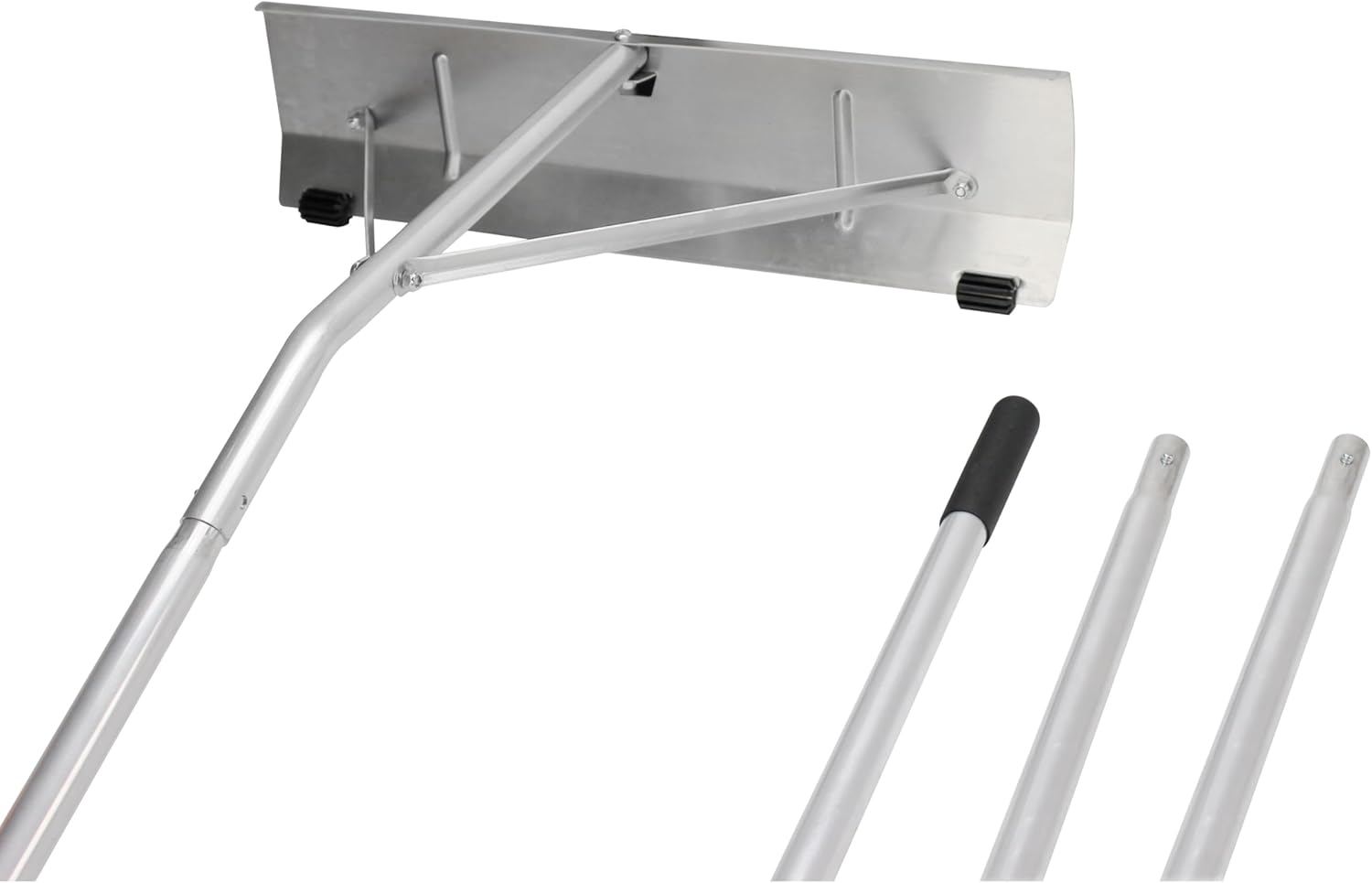
For homeowners dealing with snow buildup on roofs, the Extreme Max 5600.32 offers a long 21-foot reach and a 24-inch blade with rollers that protect shingles. Its lightweight aluminum frame and snap-button assembly make it easy to handle and store, though it works best when pulled rather than pushed.
Pros
- Lightweight aluminum construction makes it easy to maneuver
- Blade rollers protect shingles while providing close snow removal
- Quick snap-button handle assembly and disassembly for storage
- Long 21' reach suitable for two-story houses
Cons
- Plastic blade rollers can break off easily, according to user reviews
- Support arms may bend if the rake is pushed instead of pulled
Best Roof Rake For Shingle Roof Buying Guide
Blade Material and Design
The blade is the part that contacts the shingles. A rake with a non-abrasive, smooth edge is critical to avoid scraping or lifting shingles. Many models use aluminum or plastic blades with rounded corners.
Some include a rubber edge or a pivoting head to maintain a flat angle against the roof.
When choosing a roof rake for a shingle roof, look for a blade width between 20 and 30 inches for efficient snow removal without excessive weight.
Reach and Telescoping Capability
Roof rakes often come with telescoping poles that extend to reach the ridge of a one- or two-story home. The maximum length you need depends on your roof pitch and eave height.
Models like the SNOWPEELER offer up to 30 feet of reach, which suits taller roofs. Ensure the locking mechanism is secure to prevent collapse during use. For safety, always stand on the ground and avoid overreaching.
Handle Grip and Ergonomics
Removing snow from a roof is physically demanding. A comfortable, non-slip grip reduces fatigue and improves control. Some rakes feature foam or rubberized handles, while others have D-shaped grips for two-handed use.
If you have concerns about joint strain, consider a model with an ergonomic design. For additional tips on reducing physical effort during winter chores, see the lightest snow blower for seniors.
Weight and Maneuverability
A heavy rake can be tiring to lift and maneuver, especially when covered with wet snow. Aluminum and plastic construction keep weight down while maintaining durability. The Avalanche! model is known for its sturdy yet manageable build.
Balance is important: a rake that is too light may feel flimsy, while one too heavy can cause back strain. Read the snow blower for back problems guide for more on ergonomic snow removal tools.
Compatibility with Shingle Roofs
Not all roof rakes are safe for shingles. Some are designed for metal roofs or have aggressive teeth that can catch on asphalt shingles.
The Extreme Max Shingle-Saver is specifically named for its shingle-friendly design, featuring a wide, smooth blade that glides over shingles without lifting edges. Always check the manufacturer’s recommendations. Using the wrong rake can void your roof warranty.
For more on protecting your roof from winter damage, see our article on ice melt for roofs.
Why You Should Trust Us
Snow Removal Wiki is an independent review site that evaluates snow removal equipment through comprehensive research. We do not conduct our own product trials; our evaluations are grounded in research, published data, expert review consensus, and verified buyer feedback.
Each product is scored on our 0 to 10 SRW Score, which reflects its performance across consistent criteria including build quality, ease of use, safety, and value. Our goal is to provide transparent, data-driven recommendations so you can make an informed purchase.
We are committed to editorial independence and may earn a commission when you purchase through our links. This does not affect our ratings or the order of products in our lists.
Final Thoughts
After evaluating the leading models, we have selected the following award winners to help you choose the best roof rake for shingle roof for your home.
- Best Overall: Avalanche! Roof Snow Rake. With the highest SRW Score in our lineup, this rake combines durable construction, a smooth blade, and a comfortable grip. Its assembled-in-USA build and thoughtful design make it a reliable choice for protecting shingles.
- Best for Reach: SNOWPEELER Premium Roof Rake. The 30-foot telescoping pole provides exceptional reach for tall roofs, and the lightweight aluminum shaft reduces fatigue. It earned a strong SRW Score for its balance of length and control.
- Best Budget Pick: Extreme Max Shingle-Saver. Specifically designed for shingle roofs, this rake offers an affordable solution without sacrificing effectiveness. Its wide blade and moderate reach make it ideal for single-story homes.
Frequently Asked Questions
Can I use a roof rake on asphalt shingles?
Yes, but you must choose a rake specifically designed for shingles. Look for models with smooth, non-abrasive blades and rounded edges. Avoid rakes with metal teeth or sharp corners that can catch and lift shingles.
The Extreme Max Shingle-Saver and Avalanche! models are both suitable for asphalt shingles.
What length of roof rake do I need for a two-story house?
For a typical two-story home with a 6/12 pitch roof, you will need a rake that extends to at least 25 feet to reach the ridge while standing on the ground. The SNOWPEELER offers 30 feet of reach, making it a good option.
Always measure your eave height and roof angle before purchasing. For more on selecting the right tool for your property, see the residential snow blower guide for driveway clearing.
How do I prevent damaging shingles when raking snow?
Always pull snow downward, never sideways, to avoid lifting shingles. Use a rake with a smooth blade and a pivoting head that stays flat against the roof.
Remove snow in thin layers rather than trying to clear deep drifts in one pass. Applying an ice melt product designed for roofs can also help loosen ice before raking.
Check out the natural ice melt guide for a safer alternative.
Should I use a roof rake or a snow blower for roof snow removal?
A roof rake is the only recommended tool for removing snow from shingle roofs. Snow blowers are designed for ground-level use and can damage roofing materials.
If you have ground-level snow to clear, a snow blower is efficient, but for roof safety, stick with a dedicated roof rake. For more on snow blower selection, read the snow blower for first time buyers guide.
How often should I remove snow from my roof?
It depends on snow load and your roof’s structure. As a general rule, remove snow after every 6 to 12 inches of accumulation to prevent excessive weight and ice dams.
If you notice ice forming at the eaves, it is time to rake. Using a roof rake after each storm is easier than waiting for a heavy buildup.
For ongoing maintenance, consider pairing your rake with an eco-friendly ice melt to reduce ice formation. See the eco friendly ice melt guide for options.
Are roof rakes safe for all roof types?
No. Roof rakes are generally safe for asphalt shingles, wood shakes, and composite shingles when used correctly. They are not recommended for slate, tile, or metal roofs unless the manufacturer specifically approves.
Always check your roof material and the rake’s compatibility before use. For metal roofs, a softer blade or a dedicated tool may be needed.
About the author

Harry writes reviews and buying guides for Snow Removal Wiki.