The Best Roof Rake 21 Ft
A 21 ft roof rake is the safest way to stop ice dams before they start. We compared reach, blade design, and verified buyer feedback to find your winter match.
 By Harry
Updated October 12, 2026
Snow that sits on a roof for days can turn into ice dams, push under shingles, and strain gutters.
Climbing up to clear it is dangerous, which is why the best roof rake 21 ft designs are such a practical addition to a winter home.
A 21 ft handle keeps your feet on the ground while the blade reaches the eave line and pulls snow down before it refreezes.
This roundup focuses on the roof rake category with a research-backed approach. Snow Removal Wiki evaluates specifications, expert review consensus, and verified buyer feedback to separate tools that protect shingles from models that waste your time.
Pairing a roof rake with the most effective ice melt for driveways and walkways covers both the roof and the ground around your home. Below are the top picks we recommend for the season.
| Award | Product | SRW Score About SRW ScoreThe SRW Score is our own rating from 0 to 10, based on performance, design and build, ease of use, and value. It reflects independent research and is never influenced by manufacturers, retailers, or affiliate commissions. Learn more › | |
|---|---|---|---|
| Best Overall |
 Extreme Max 5600.32 Roof Snow Rake |
8.1/10 | Buy |
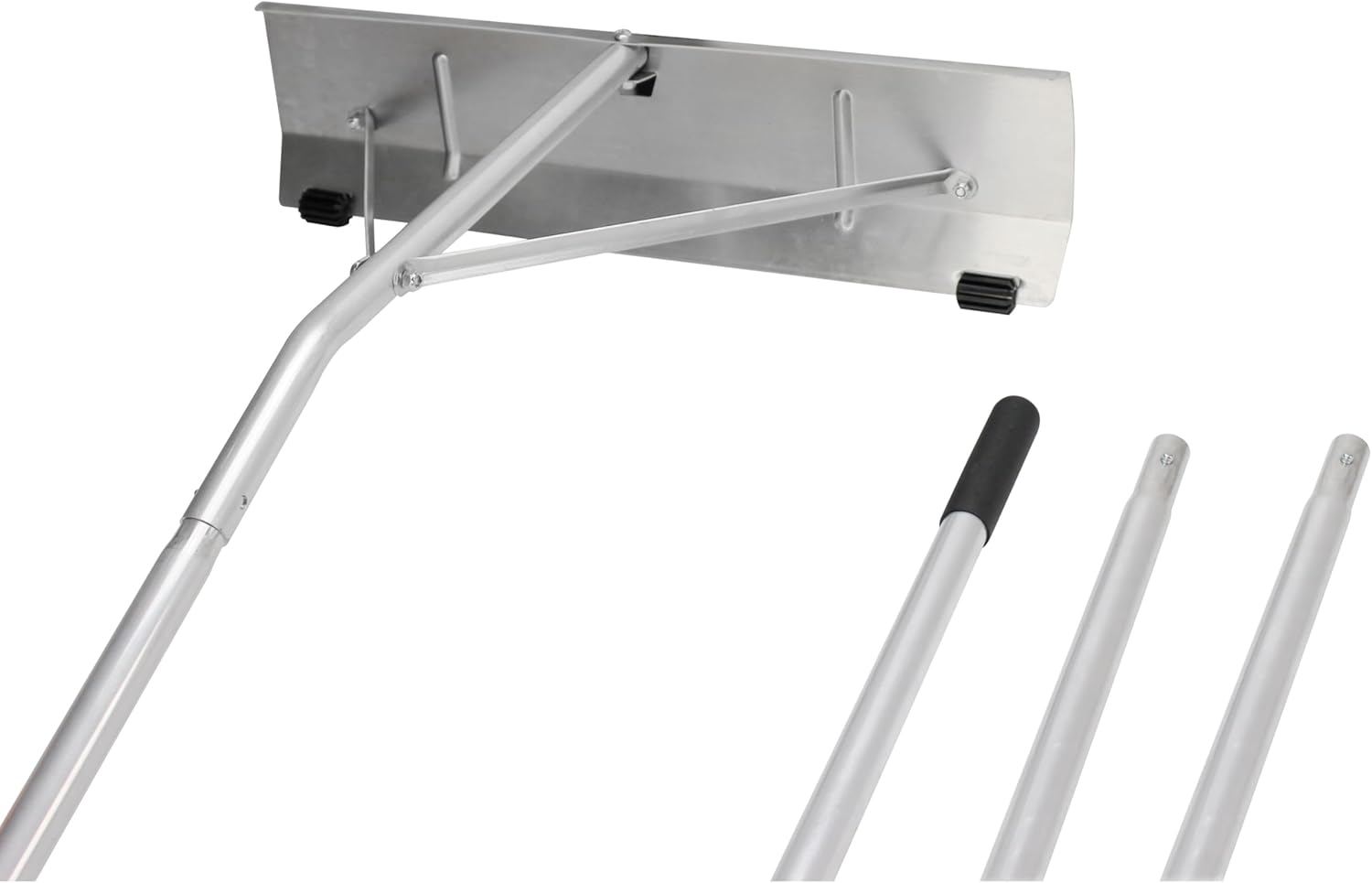
Extreme Max 5600.32 Roof Snow Rake
For homeowners dealing with snow buildup on roofs, the Extreme Max 5600.32 offers a long 21-foot reach and a 24-inch blade with rollers that protect shingles. Its lightweight aluminum frame and snap-button assembly make it easy to handle and store, though it works best when pulled rather than pushed.
Pros
- Lightweight aluminum construction makes it easy to maneuver
- Blade rollers protect shingles while providing close snow removal
- Quick snap-button handle assembly and disassembly for storage
- Long 21' reach suitable for two-story houses
Cons
- Plastic blade rollers can break off easily, according to user reviews
- Support arms may bend if the rake is pushed instead of pulled
Best Roof Rake 21 Ft Buying Guide
Reach and Handle Length
Roofs vary in width from the eave to the peak, and a 21 ft handle covers most two story homes without requiring a ladder.
Measure the distance from the ground to the uppermost snow line and add a few feet for the blade angle.
If the handle has a curved end, use it to pull rather than push; that keeps the load closer to your body.
A longer shaft also means more weight, so look for a sectional design that breaks down for storage. After the snow reaches the ground, a compact snow thrower can handle the pile that collects around the foundation.
Blade Design and Material
Blades come in aluminum, plastic, or coated steel. A wide blade clears more snow per pass but can be harder to control on thick, wet loads.
The best roof rake 21 ft options use a curved scoop that lifts snow away from the surface instead of scraping it.
When you rake asphalt shingles, choose a non-abrasive edge. A shingle-saving blade is designed to preserve the protective granules on the roof. For the ground-level mess after you finish, a safe de-icer for steps keeps walkways from turning into sheet ice.
Handle and Grip Comfort
Raking snow is repetitive work. A foam or rubber grip reduces hand fatigue, and a comfortable shaft angle saves your wrists on the final pull. If the rake comes with a padded section, use it as the pivot point when you lever the snow off.
Some handles have a telescoping feature so the same tool can adjust to different roof heights. This flexibility matters for garage additions, porches, and shed roofs.
The same thinking behind snow blower accessories applies to roof rakes: comfort and storage determine whether the tool becomes a seasonal habit or a one-time misfit.
Durability and Storage
In cold weather, plastic components can become brittle. Metal shafts and reinforced joints handle repeated snow loads better, especially when the snow is wet and heavy.
Check the connection points on a sectional rake; a loose collar will ruin the tool faster than a bent blade.
A 21 ft rake is rarely left assembled. Look for a model that separates into manageable sections and comes with a storage sleeve or convenient clip.
Once the pile is deep on the ground, a two stage snow blower takes over and moves the material away from the house.
Roof Compatibility and Safety
Before using a roof rake, understand your roof pitch and the distance from the eave to the peak.
A 21 ft handle offers enough reach for most homes, but a steep metal roof or fragile slate tile may require a different approach. If you have any doubt, ask a roofing professional.
Do not stand on the roof or lean out of an upper window to extend the reach. Keep both feet planted, maintain a wide stance, and let the handle absorb the weight.
After the snow falls, long lasting ice melt reduces slip hazards on driveways and walkways.
Why You Should Trust Us
Snow Removal Wiki operates as an independent review publisher. We do not sell roof rakes, and we do not accept payment from manufacturers for placement in our guides.
Each product is rated on a 0 to 10 SRW Score using consistent criteria across the roof rake category, including reach, blade effectiveness, build quality, and owner satisfaction.
We do not conduct our own product trials; our evaluations are grounded in research, published data, expert review consensus, and verified buyer feedback.
We apply the same method to other winter gear, including snow blowers built for wet snow and de-icers for high-traffic areas.
That consistency makes it easier to compare one tool against another and decide where your money delivers the most value.
Final Thoughts
Choosing a roof rake comes down to reach, blade safety, and build quality.
The Extreme Max 5600.3207 Shingle-Saver 21′ Roof Snow Rake earns the top spot in this group because it combines a wide, shingle-friendly blade with a 21 ft handle that reaches most eaves without a ladder.
Best Overall: Extreme Max Shingle-Saver 21′ Roof Snow Rake is our highest-scoring pick in the best roof rake 21 ft category. Its SRW Score leads this group, and verified owner feedback highlights the blade’s ability to clear snow without tearing up roof shingles.
Frequently Asked Questions
How does a 21 ft roof rake prevent ice dams?
An ice dam forms when snow melts near the warm part of the roof, then refreezes at the cold eave. Pulling snow off that lower edge removes the fuel source before it becomes ice.
Keeping the eave clear also protects gutters from the weight of a frozen block. For the leftover thin layer, ice melt pellets can help after you rake the bulk snow away.
Can I use a 21 ft roof rake on a steep roof?
A 21 ft roof rake works on moderately pitched roofs if you stand at a safe distance and keep the blade flat against the shingles. Very steep or high roofs may need a professional snow removal service.
Ground-level walkways still need attention, and walkway snow blowers make that part easier.
What is the best roof rake 21 ft for asphalt shingles?
The Extreme Max Shingle-Saver is a strong choice for asphalt shingles because its 24-inch blade has a rounded, non-scraping edge. It lifts snow instead of digging into the surface, which helps protect the granules that keep shingles functional.
For long driveways, a battery powered snow thrower can handle the snow after it hits the ground.
How often should I rake snow off my roof?
Rake after every significant snowfall, especially when temperatures hover near freezing. Focus on the bottom 4 to 6 feet of the roof where ice dams usually form.
If you cannot keep up with heavy snow, a professional grade snow blower helps move the piles away from the foundation before they refreeze.
Do I still need ice melt if I use a roof rake?
Yes. A roof rake removes bulk snow from the shingles, but it does not stop moisture from freezing on walkways or driveways. Spreading de-icer after each pass adds a second layer of protection, and keeping entry paths safe reduces slips.
If you prefer a bright, safe setup after dark, a snow blower with headlights makes evening clearing more practical.
Can a roof rake replace a snow blower?
No. A roof rake is a roof-specific tool, while a snow blower clears ground-level accumulation from driveways, walks, and patios.
The two work well together: you rake the roofline to prevent ice dams, then use a blower or thrower to clear what falls. That division of labor keeps the whole property safe through the winter.
About the author

Harry writes reviews and buying guides for Snow Removal Wiki.