The Best Midwest Rake Roof Rake
Compare the best Midwest rake roof rake picks for wet snow, ice dams, and shingle safety, with practical tips to find the right reach and blade.
 By Harry
Updated October 12, 2026
Winter in the Midwest brings heavy snow and sudden temperature swings. Left on the roof, that snow can turn into ice dams that lift shingles and leak into your home.
A roof rake lets you pull snow off the eaves before it hardens, and choosing the best Midwest rake roof rake starts with understanding your roof type and how much snow you usually get.
Snow Removal Wiki selected these models through research, expert review consensus, and verified buyer feedback. We compared construction, reach, and the practical reports from homeowners who clear snow several times a season.
If the driveway also needs attention, our guide to snow blowers at Lowes covers another essential part of winter cleanup.
| Award | Product | SRW Score About SRW ScoreThe SRW Score is our own rating from 0 to 10, based on performance, design and build, ease of use, and value. It reflects independent research and is never influenced by manufacturers, retailers, or affiliate commissions. Learn more › | |
|---|---|---|---|
| Best Overall |
 Avalanche! AVA500 15.5' Roof Snow Rake |
8.4/10 | Buy |
| Best Value |
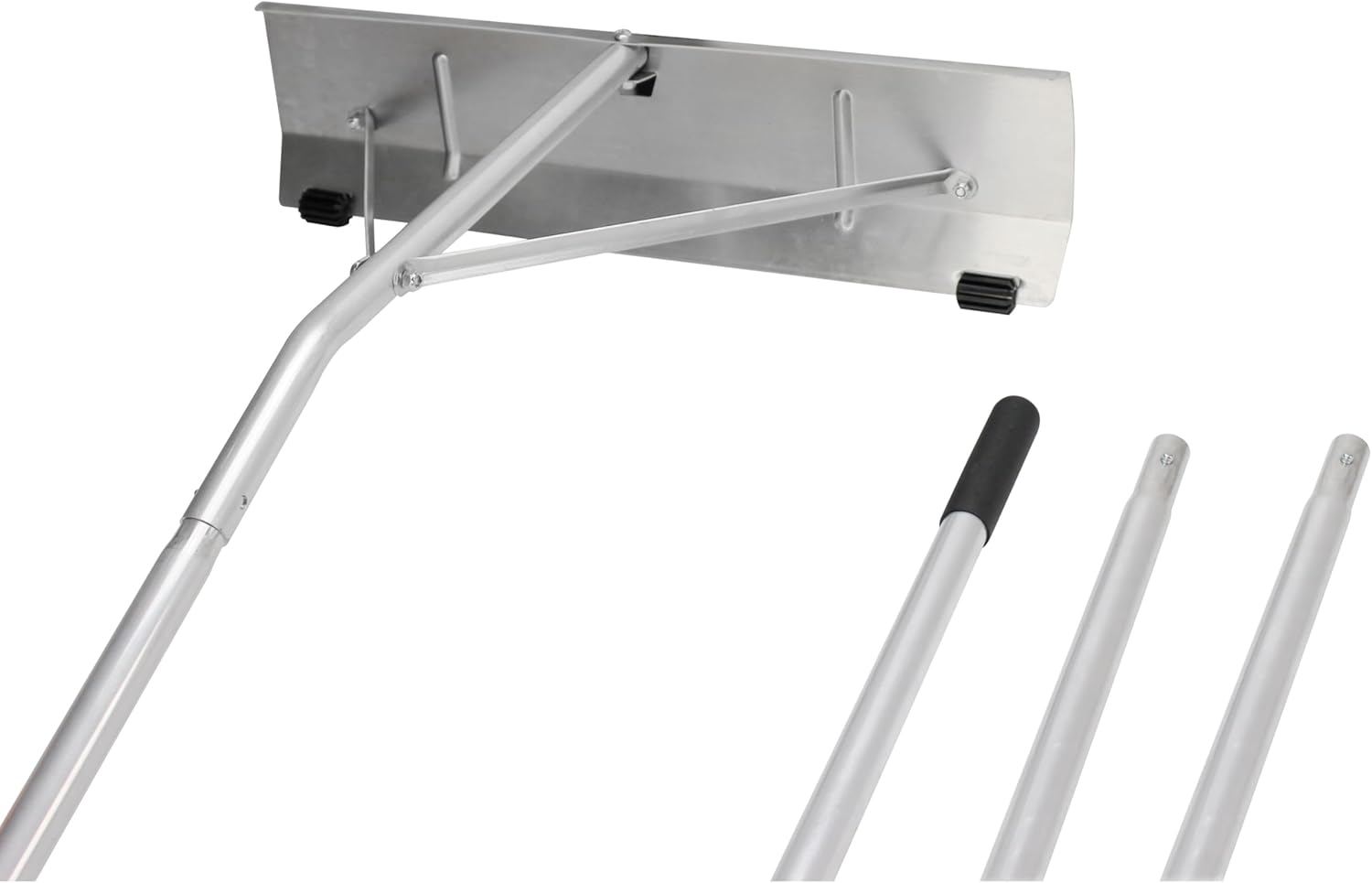 Extreme Max 5600.32 Roof Snow Rake |
8.1/10 | Buy |
Avalanche! AVA500 15.5' Roof Snow Rake
For homeowners needing to clear snow from asphalt shingle roofs without damage, the Avalanche! AVA500 uses a lightweight fiberglass pole and a plastic slide with wheels to glide over shingles. Its snap-together assembly makes setup quick, and the 15.5-foot reach lets you work from the ground.
Pros
- Lightweight fiberglass pole reduces fatigue
- Snap-together assembly for quick setup
- Wheels protect asphalt shingles from damage
Cons
- Plastic slide may be less durable than metal alternatives
- 15.5-foot pole may be insufficient for very high roofs
Extreme Max 5600.32 Roof Snow Rake
For homeowners dealing with snow buildup on roofs, the Extreme Max 5600.32 offers a long 21-foot reach and a 24-inch blade with rollers that protect shingles. Its lightweight aluminum frame and snap-button assembly make it easy to handle and store, though it works best when pulled rather than pushed.
Pros
- Lightweight aluminum construction makes it easy to maneuver
- Blade rollers protect shingles while providing close snow removal
- Quick snap-button handle assembly and disassembly for storage
- Long 21' reach suitable for two-story houses
Cons
- Plastic blade rollers can break off easily, according to user reviews
- Support arms may bend if the rake is pushed instead of pulled
Best Midwest Rake Roof Rake Buying Guide
Reach and Working Length
The most important measurement is how far the rake can reach without putting you on a ladder.
Stand at the edge of the roof and look at the ridge; the handle should extend well past the eave line so you can clear the first few feet of shingles.
For homes that sit at the top of hillside driveways, keeping your feet on flat ground matters even more.
Think about snow depth too. If you regularly deal with deep snow conditions, choose a longer, sturdier rake and pair it with other equipment designed for the same climate.
Blade Width and Roof Protection
Roof rake blades come in different widths and materials. A wider blade clears more ground in one pull, but a narrower blade is easier to control through wet, heavy snow. Look for smooth edges and a curved head that lifts snow rather than scraping it.
The blade should be kind to your roofing material. For asphalt shingles, a plastic or foam-tipped edge reduces the chance of tearing away granules. On the ground below, snow melting mats can keep walkways clear once the roof snow starts to slide.
Handle Design and Maneuverability
Roof raking is repetitive, so the handle has to feel right. A cushioned grip and locking sections make it easier to control the rake from a safe spot on the ground.
If you are used to a non self propelled snow blower for manual driveway clearing, you know how much a comfortable handle changes the job.
Weight matters more than you might expect. A long aluminum or fiberglass pole can be held overhead without tiring you out too quickly, especially when you cover the entire front of the house.
On smaller homes and mobile homes, a shorter, lighter rake is often the more practical choice.
Snow Type and Roof Pitch
Midwestern snow is rarely light and powdery. Wet snow sticks to shingles and forms ice dams quickly when temperatures bounce around freezing. The best Midwest rake roof rake for this region needs a blade that can lift heavy, slushy snow without bending out of shape.
If you live in a lake-effect snow belt, you may also rely on a three stage snow blower for the driveway, but the roof requires a different tool.
Clearing a few feet up from the eave after every storm is the most direct way to stop water from working under the shingles.
Once the snow is on the ground, use ice melt granules to keep the area beneath the roofline safe. That two-part approach prevents ice from building up both above and below.
Storage and Assembly
A roof rake is a seasonal tool, so it should not take over your garage. Look for sections that break down and a blade that can be hung on a wall hook.
Homeowners with limited space may prefer a model that fits neatly beside a snow shovel.
Check the joints before you buy. Sections that lock with a simple twist are easier to set up in the dark, while a wobbly connection makes the whole rake harder to handle.
Verified buyer feedback is useful here because owners will mention whether the connections stay tight after a season of use.
Why You Should Trust Us
Snow Removal Wiki is an independent review site, not a retailer. We may earn a commission when you buy through our links, but that never affects our ratings. We do not accept payment from manufacturers to change a score.
We do not conduct our own product trials; our evaluations are grounded in research, published data, expert review consensus, and verified buyer feedback.
Each product is evaluated against consistent criteria and scored on our 0 to 10 SRW Score. That score reflects how well the product meets the needs of its category, from build quality to the experiences reported by verified owners.
We also cover related snow removal tools, from snow blowers at Home Depot to snow throwers, so you can plan for the whole property.
Final Thoughts
Choosing the best Midwest rake roof rake comes down to reach, blade design, and how comfortable the handle feels for the size of your home. The two picks below earned the highest marks in our research for the way they handle Midwest winter conditions.
Best Overall: Avalanche! Roof Snow Rake earned the highest SRW Score in this group for its durable construction, long reach, and blade that clears wet snow without tearing shingles.
Best for Shingle Protection: Extreme Max Shingle-Saver Roof Snow Rake earns a strong SRW Score for its wide, smooth blade and manageable length, making it a dependable choice for asphalt shingle roofs.
Pair your roof rake with a solid snow blower for the driveway, and the whole property moves into spring without surprises.
Frequently Asked Questions
How does a roof rake prevent ice dams?
A roof rake pulls snow off the lower edge of the roof before it melts and refreezes. That keeps ice from piling up at the eaves, where it can lift shingles and cause leaks.
Removing snow a few feet up the slope also gives melting water a clear path off the roof.
What length roof rake do I need in the Midwest?
Measure from the ground to the roofline and subtract a few feet if you want to stand closer. Most Midwest homes need a rake that reaches at least the eave without a ladder.
For a typical two car driveway, a matching snow blower can cut total clearing time in half.
Can a roof rake damage asphalt shingles?
Damage usually happens when the blade digs into the shingles or when you pull a heavy load sideways. Choose a rake with a smooth polymer blade and lift rather than scrape.
A layer of sodium chloride ice melt can also reduce the ice buildup that makes raking harder.
Should I use a roof rake on a metal roof?
Yes, but choose a rake with a soft or rounded blade edge to avoid scratching the finish. On smooth metal, snow slides off quickly, so you may only need to clear the lowest two or three feet.
Keep gutters and downspouts clear as part of the routine.
How often should I clear snow from my roof?
In the Midwest, clear after every storm that drops more than a few inches of heavy snow. Pay attention to freeze-thaw cycles because those create the highest ice dam risk.
A roof rake works best when you use it before the snow settles into a hard crust.
What else can I do to reduce ice dams?
Combine roof raking with better attic insulation and ventilation. For the ground around your home, choose a safe ice melt if children or pets use the area, and stock up on bulk ice melt to keep walkways clear all season.
About the author

Harry writes reviews and buying guides for Snow Removal Wiki.