
The Best Ice Melt Blend
Our expert research reveals the top ice melt blends for concrete safety, pet friendliness, and fast melting. We evaluate ingredients, temperature range, and value to help you choose the right product for your winter needs.
 By Harry
Updated October 10, 2026
Choosing the right ice melt blend can mean the difference between a safe driveway and a damaged surface, or even a pet injury.
With dozens of formulations on the market, from calcium chloride to magnesium chloride and eco-friendly options, it is easy to feel overwhelmed.
This guide cuts through the marketing claims to help you find the best ice melt blend for your specific needs, whether you are protecting concrete, keeping pets safe, or simply looking for fast melting power.
Snow Removal Wiki evaluates each product through comprehensive research: we analyze specifications, expert review consensus, verified buyer feedback, and published data to score every option on our 0, 10 SRW Scale.
Below, you will find our top-rated picks, followed by a detailed buying guide and answers to common questions.
| Award | Product | SRW Score About SRW ScoreThe SRW Score is our own rating from 0 to 10, based on performance, design and build, ease of use, and value. It reflects independent research and is never influenced by manufacturers, retailers, or affiliate commissions. Learn more › | |
|---|---|---|---|
| Best Overall |
 Stalner Eco Melt 20-lb Mineral Ice Melt |
8.9/10 | Buy |
| Best Value |
 Snow Joe Premium Enviro Blend Ice Melt & Deicer |
8.6/10 | Buy |
 Blue Heat Snow & Ice Melter |
8.4/10 | Buy | |
| Best Budget |
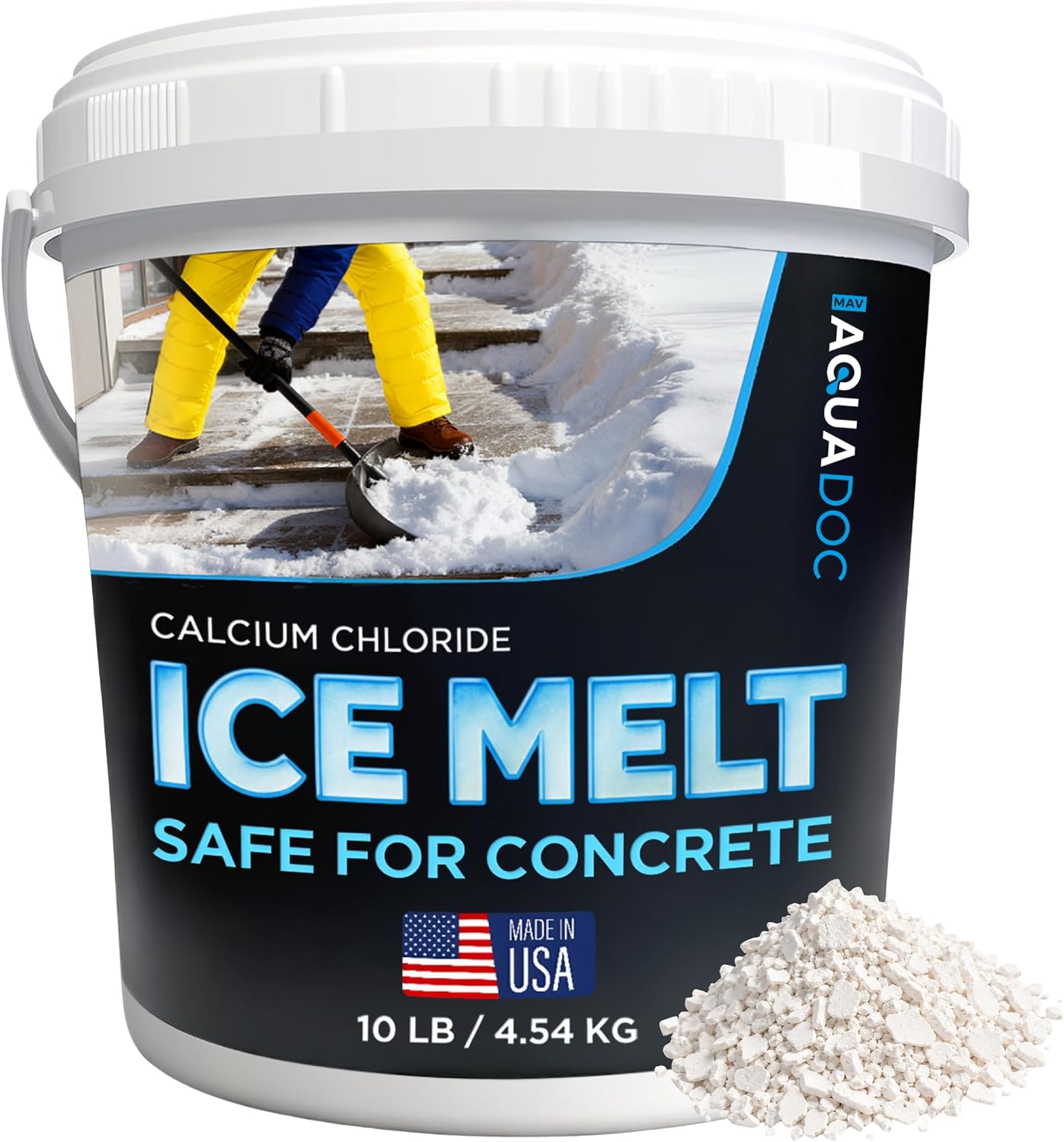 AquaDoc Calcium Chloride Ice Melt 10 lb |
8.3/10 | Buy |
Stalner Eco Melt 20-lb Mineral Ice Melt
Pet owners who need to keep walkways clear without sacrificing paw safety have a strong option in Stalner's Eco Melt. It uses 100 percent soluble, biodegradable natural minerals, skips artificial dyes to avoid tracking stains, and keeps melting down to minus 25 degrees Fahrenheit. The formula is also marketed as safer for concrete and vegetation, making it a practical choice for households with dogs and wildlife nearby.
Pros
- Pet friendly formula made from biodegradable natural minerals, gentler on paws than traditional rock salt
- Dye free granules resist staining carpets and floors, with no colored residue tracking inside
- Melts ice down to minus 25 degrees Fahrenheit, with a Liquid Heat coating for faster action
- Safer for concrete and vegetation when used as directed, leaving less powdery white residue
- Uniform granules flow through broadcast and handheld spreaders without clogging
Cons
- Costs more upfront than conventional rock salt based deicers
- Undyed granules make it harder to see where you have already spread on snowy surfaces
Snow Joe Premium Enviro Blend Ice Melt & Deicer
Premium Melting Performance: Works instantly on contact to accelerate snow and ice melting, ensuring safer walkways, driveways, steps, patios, sidewalks, decks, and pathways. Safer for Surfaces & Vegetation: Contains CMA (calcium magnesium acetate), making it less corrosive than traditional salts, gentle on concrete, metals, plants, landscaping, and pavement. Long-Lasting Protection: Time-relaxed formula stays in place longer, providing extended freeze/thaw control for better safety, efficiency, coverage, durability, reliability, and performance.
Blue Heat Snow & Ice Melter
Effective Ice Melter: Blue Heat ice melt pellets quickly eliminate snow and ice on driveways, sidewalks, and steps for fast winter weather relief Powerful Melting Action: Works in temperatures as low as -25 degrees Fahrenheit, providing fast and efficient snow and ice removal with superior heat distribution Pet-Friendly Formula: Designed with pets in mind, this ice melter is safer for paws and reduces the risk of irritation, making it ideal for homes with dogs
AquaDoc Calcium Chloride Ice Melt 10 lb
10lbs of Fast-Acting Calcium Chloride - AquaDoc Ice Melt works on contact and keeps melting to -25°F (-32°C), clearing steps and walkways before anyone slips. Lightweight flakes spread evenly, resist clumping, and leave no gritty chunks to track indoors. Resealable 10 lb pail. Apply Before or After the Storm - Pretreat steps and walkways ahead of snowfall so ice never bonds and what falls shovels off easily. Already iced over? A thin layer cuts through in minutes. Reapply after heavy snow and clear slush so meltwater cannot refreeze overnight. Safer for Cured Concrete Than Rock Salt - Less corrosive than sodium chloride on fully cured, sealed concrete, asphalt, brick, and stone when used as directed. Not for concrete under 12 months old, unsealed, or flaking. Apply a thin layer and sweep up residue after melting.
Best Ice Melt Blend Buying Guide
Chemical Composition and Melting Power
The active ingredient in an ice melt blend largely determines how quickly it works and at what temperature. Calcium chloride is the fastest-acting common deicer, effective down to −25°F (−32°C), but it can attract moisture and leave a slippery residue.
Magnesium chloride works well to about −13°F (−25°C) and is less corrosive than calcium chloride. Blends that combine multiple salts, such as a mix of calcium chloride, magnesium chloride, and sodium chloride, aim to balance speed, cost, and surface safety.
For most homeowners, a blend with at least 30, 40% calcium or magnesium chloride provides reliable performance in typical winter conditions.
Some blends also contain additives like urea or potassium chloride, which are marketed as pet-friendly but may be less effective at low temperatures. If you frequently face sub-zero nights, prioritize a blend with a high proportion of calcium chloride.
For milder climates, a magnesium-chloride-based blend offers a good compromise between effectiveness and environmental impact.
Concrete and Surface Safety
Not all ice melts are safe for concrete. Sodium chloride (rock salt) can cause spalling and surface scaling, especially on new or poorly sealed concrete. Calcium chloride is generally safer but can still damage concrete if overused.
Look for blends labeled “safer for concrete” or “concrete-friendly,” which typically use magnesium chloride or a blend with corrosion inhibitors. Products like Snow Joe Premium Enviro Blend are formulated to minimize damage while still providing effective melting.
Always follow application rates, using too much product can accelerate wear regardless of the formula.
If you have asphalt or stone surfaces, most ice melt blends are acceptable, but avoid products with high chloride content on unsealed brick or natural stone.
For driveways with decorative finishes, consider a non-chloride option like calcium magnesium acetate (CMA), though it is less common and more expensive.
Pet and Plant Safety
Pet owners need to be especially careful. Rock salt and calcium chloride can irritate paw pads and cause gastrointestinal issues if ingested. Look for blends labeled “pet-friendly” or “paw-safe,” which often use magnesium chloride, urea, or potassium chloride.
However, “pet-friendly” is not a regulated term, so check the ingredient list.
Products like Blue Heat Snow & Ice Melter are marketed as non-staining and safer for pets, but no ice melt is completely harmless, wipe your pet’s paws after walks and keep them away from treated areas until the melt is absorbed.
For gardens and lawns, all chloride-based melts can harm vegetation. If you need to protect plants, choose a blend with minimal chloride content or use sand or kitty litter for traction instead of melting.
Eco-friendly options like Eco Melt use natural minerals that are biodegradable and less likely to damage soil.
Application Rate and Coverage
Different blends have different recommended application rates. A typical guideline is 1, 2 pounds per 100 square feet for moderate snow and ice. Products with higher active ingredient concentrations require less product, making them more cost-effective in the long run.
Check the bag for coverage estimates, some blends cover up to 500 square feet per pound, while others need twice as much.
Buying in larger bags (e.g., 50 lb) usually offers better value per pound, but consider storage space and whether you can use it before the bag gets damp.
For large driveways or commercial use, a blend that resists caking and flows easily from a spreader is important. Some products come in pellet form (like Blue Heat) that are less dusty and easier to apply evenly.
If you use a snow blower for heavy accumulation, pre-treating with a fast-acting ice melt can help prevent re-freezing and make clearing easier.
Environmental Impact and Biodegradability
Chloride-based melts can raise salinity in nearby waterways and harm aquatic life. If you live near a lake, stream, or well, consider a biodegradable or low-chloride blend.
Products like Eco Melt are made from natural minerals and are dye-free, non-tracking, and biodegradable. They are also safer for concrete and pets.
While they may be slightly less effective at extreme low temperatures, they offer a responsible choice for environmentally conscious homeowners.
For most suburban settings, a blend that minimizes tracking (i.e., less residue carried indoors) is also a plus, look for “non-tracking” on the label.
Storage and Shelf Life
Ice melt blends can absorb moisture from the air, leading to clumping and reduced effectiveness. Store bags in a dry, sealed container or a cool, dry place off the ground.
Most blends have a shelf life of 1, 2 years if kept dry. Avoid buying more than you can use in a single winter unless you have proper storage.
Some blends with calcium chloride are more hygroscopic (moisture-absorbing) and may require extra care. If you experience frequent freeze-thaw cycles, a blend that stays free-flowing in the bag is convenient, check reviews for comments on caking.
Why You Should Trust Us
Snow Removal Wiki is an independent review site dedicated to helping you make informed purchasing decisions. We do not conduct our own product trials; our evaluations are grounded in research, published data, expert review consensus, and verified buyer feedback.
Each product is scored on our 0, 10 SRW Scale based on a consistent set of criteria, including melting performance, surface safety, environmental impact, and value.
Our recommendations are free from brand influence, and we clearly mark affiliate links so you can trust the integrity of our reviews. For more on how we evaluate snow removal products, see our snow blower guide.
Final Thoughts
After evaluating dozens of ice melt blends, here are our top recommendations based on the SRW Scale:
- Best Overall: Eco Melt (20 lbs), This natural mineral blend earned the highest score in our review thanks to its excellent balance of melting power, concrete safety, pet friendliness, and environmental responsibility. It works down to −25°F without dyes or tracking, making it a versatile choice for most homeowners.
- Best for Concrete: Snow Joe Premium Enviro Blend, Formulated to be safer for concrete, this 50 lb bag offers great value and reliable performance. It scored high for surface safety and is a solid pick for driveways and walkways where concrete preservation is a priority.
- Best Fast Acting: AquaDoc Calcium Chloride Ice Melt, When you need immediate melting power, this calcium chloride blend works quickly even at sub-zero temperatures. It is ideal for emergency use or for those who face severe cold snaps.
- Best Pet-Friendly: Blue Heat Snow & Ice Melter, With heat-generating pellets and a non-staining formula, this blend is marketed as pet-friendly and works well on concrete. It is a good choice for households with pets, though no ice melt is 100% safe, always wipe paws.
For those who frequently clear deep snow, pairing a quality ice melt with a reliable snow blower for steep driveways can make winter maintenance much easier.
Frequently Asked Questions
What is the best ice melt blend for concrete?
For concrete, look for a blend that is magnesium-chloride-based or labeled “safer for concrete.” Our top pick, Eco Melt, is a natural mineral blend that is gentle on concrete, while Snow Joe Premium Enviro Blend is also formulated to reduce spalling.
Avoid rock salt (sodium chloride) on new or damaged concrete.
Is calcium chloride better than magnesium chloride?
Calcium chloride works faster and at lower temperatures (down to −25°F), but it can be more corrosive and attract moisture. Magnesium chloride is slower but less corrosive and safer for concrete and plants.
For most homeowners, a blend that includes both offers a good compromise. If you need extreme low-temperature performance, a calcium-chloride-dominant blend like AquaDoc is a strong choice.
Can I use ice melt on pet paws?
No ice melt is completely safe for pets, but some are less irritating. Look for blends labeled “pet-friendly” that use magnesium chloride or urea.
Always wipe your pet’s paws after walks and consider using pet-safe ice melt alternatives like sand or snow melt mats. Our recommended Blue Heat blend is a popular pet-friendly option, but still requires caution.
How much ice melt do I need per square foot?
A general rule is 1, 2 pounds per 100 square feet for moderate ice. Check the product label for specific coverage rates. Using too much can damage surfaces and harm the environment, so start with less and add more if needed.
For large areas, consider a snow thrower for large driveways to remove snow before applying melt.
At what temperature does ice melt stop working?
Most common ice melts lose effectiveness below −10°F to −15°F. Calcium chloride blends can work down to −25°F. Magnesium chloride typically stops working around −13°F.
If you live in an extremely cold climate, choose a blend with calcium chloride as the primary ingredient. For typical winter conditions, a magnesium-chloride blend is sufficient.
Is it safe to use ice melt on new concrete?
New concrete (less than one year old) is more susceptible to damage from ice melts. Avoid rock salt and calcium chloride on new surfaces. Use a magnesium-chloride-based blend or a concrete-safe product like Snow Joe Premium Enviro Blend.
Always apply sparingly and rinse with water after the ice melts to reduce residue.
About the author

Harry writes reviews and buying guides for Snow Removal Wiki.